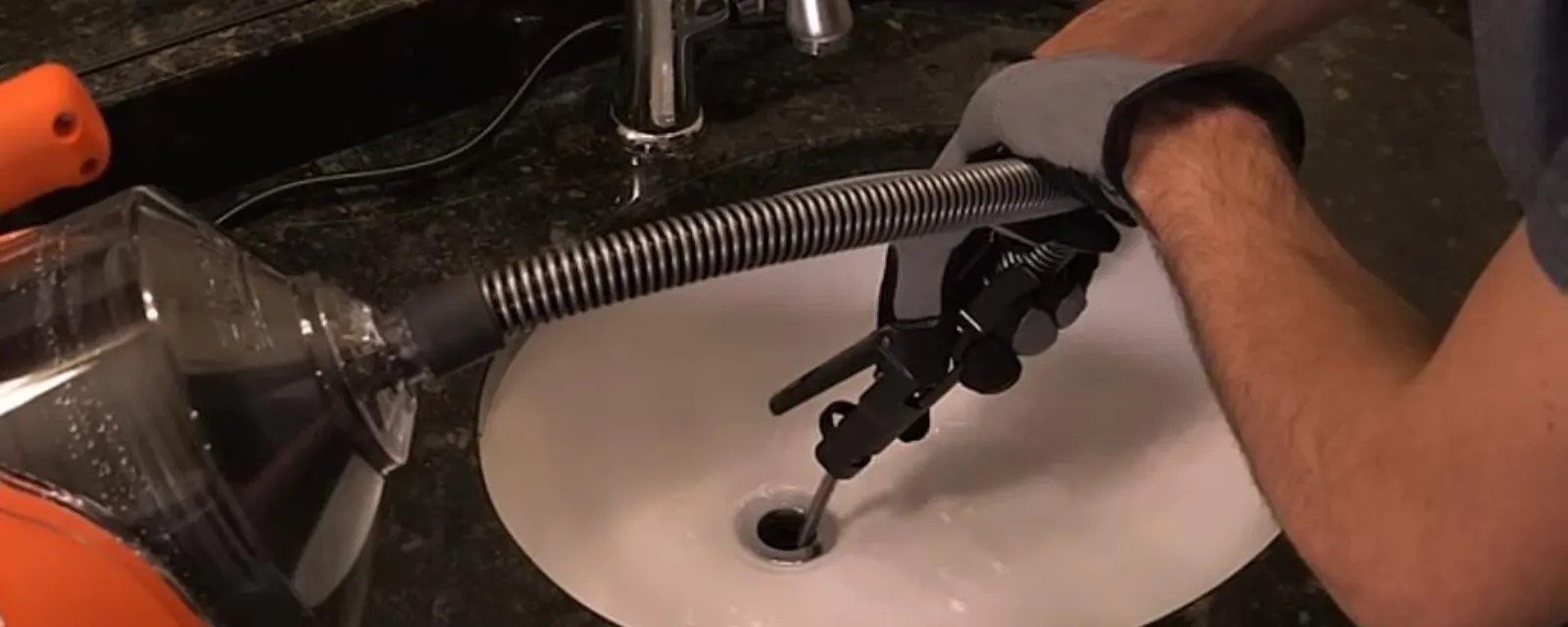
Why the plunger did not work
A bathroom sink that stays slow after plunging usually has one of four problems. The pop-up stopper mechanism is coated in hair and soap, the P-trap under the sink is packed, the vent is restricted so the drain cannot breathe, or the branch line behind the wall is partly blocked. Each has a different symptom, and the table below separates them.
A plunger works only when it can move water against a blockage close to the drain. If the clog sits deeper, or air cannot enter behind the water, plunging just shuffles the same water back and forth. Start with the cheapest, closest cause and work outward.
Symptom to likely cause
Match what you see and hear to the most probable culprit before you take anything apart.
| What the sink does | Most likely cause | What to try | Call a plumber if |
|---|---|---|---|
| Drains slowly from the very first second, stopper present | Hair and soap film wrapped around the pop-up stopper or pivot rod | Remove and clean the stopper, then flush with hot water | The stopper will not release or the pivot nut is seized |
| Holds water for a while, then glugs down | Trap packed with sludge, or a partial clog just past the trap | Empty and clean the P-trap into a bucket | Water still stands after the trap is clear |
| Gurgles loudly and drains in bursts | A restricted vent starving the line of air | Check whether other fixtures gurgle too and note when it happens | More than one fixture gurgles, since vent work happens in the walls |
| Sink drains fine but the tub or toilet nearby is slow | A partial blockage in the shared branch line | Run a hand auger from the cleanout or fixture if you know how | Water backs up into a second fixture |
| Water pools around the base of the stopper or smells foul | Biofilm in the overflow channel and stopper housing | Clean the overflow opening with a bottle brush and a mild cleaner | The smell persists after cleaning |
Clean the stopper assembly in about fifteen minutes
This is the fix that works more often than people expect. You need a bucket, a flashlight, an old toothbrush and a pair of gloves.
Clear the cabinet and set a bucket
Empty the space under the sink and place a bucket beneath the trap in case any water remains in it.
Free the pivot rod
Look behind the tailpipe for a horizontal rod held by a small nut. Unscrew the nut by hand or with pliers and slide the rod out of the pivot ball, which releases the stopper.
Lift the stopper out
Pull it straight up from the top of the sink. Most come out with a gentle tug and a trailing clump of hair and slime.
Scrub and probe
Wipe the stopper clean, then use the toothbrush and a straightened wire hanger with a small hook to pull debris from the drain throat.
Reassemble and test
Slide the rod back into the pivot ball, hand-tighten the nut, and run hot water. If it flows freely, you are done. If not, move on to the trap.
Opening the trap if the stopper was not the problem
Place the bucket and loosen the slip nuts
The curved P-trap is held by two slip nuts. Turn them counterclockwise by hand and catch the water that spills out.
Empty and inspect the trap
Dump it into the bucket. A heavy, gray sludge of hair, toothpaste and soap is the usual find.
Check the wall stub
Shine a light into the pipe that goes into the wall. A short length of flexible brush can reach the first few inches.
Reconnect carefully
Seat each washer straight, tighten the nuts by hand and a quarter turn more, then run water and check for drips.
Do it yourself or call a plumber
Reasonable to try at home
- Removing and cleaning the pop-up stopper and pivot rod.
- Emptying and cleaning the P-trap with a bucket underneath.
- Using a plastic drain strip or small brush in the first few inches.
- Cleaning the overflow channel and stopper housing.
- Flushing with hot tap water after any cleaning.
Better left to a plumber
- A clog that remains after the stopper and trap are clean.
- Gurgling or slow drains at more than one fixture.
- Water backing up into the tub or toilet when the sink drains.
- Corroded or seized fittings that crumble when touched.
- Any sewer smell that continues after the drain is open.
Why chemical drain openers are a poor bet
Caustic openers can sit in a standing sink and eat at fittings, and they can splash when you finally plunge. They also rarely cut through a hair-and-soap mat completely, so you end up with a partly open drain and a chemical-filled trap.
If you have already used one, tell the plumber. It changes how they handle the trap and what protective gear they wear.
When the problem sits further down the line
A blockage past the trap and into the branch line needs a cable, not a plunger. A small hand auger can reach some of these, but a pass with a powered cable on a drain cleaning visit clears soap, hair and scale from the pipe wall and tests whether other fixtures share the problem.
If a camera shows damaged or heavily scaled pipe, clearing alone will not hold for long. That is a conversation about plumbing installation work for new sections or fittings, and it should come with a clear price before work starts.
Keeping the bathroom sink open
- Pull and rinse the stopper every month or two, before the slow drain starts.
- Keep a drain screen in place to catch hair before it gets to the trap.
- Rinse the sink with hot water after shaving or brushing to flush soap.
- Wipe the overflow opening with a small brush so biofilm does not build up.
- Avoid pouring oils, wax or cosmetics wipes down the drain.
- Notice any gurgling early and write down which fixtures it affects.
What decides the price of a bathroom drain call
Most bathroom sink calls are small jobs, but a few factors move the price. The plumber quotes the price up front, before any tools come out.
Where the clog sits
A stopper or trap job takes minutes, while a branch line clog needs a cable and more time.
Access under the sink
Tight cabinets, seized nuts or a corroded trap add work and sometimes parts.
Single fixture or shared line
If the tub and toilet are affected, the plumber is clearing a larger section of pipe.
Parts that need replacing
A worn stopper, pivot rod or trap may be swapped for a matching part while the sink is open.
Repeat blockages
A drain that clogs again quickly can call for a camera look, which changes the scope of the visit.
Routine clogs are normally a maintenance matter and not an insured loss, though water damage from an overflow may be treated differently, so check your policy.
Beyond Coronado
The same trap and stopper logic applies in any house. If you maintain a rental or a family member's home nearby, our plumber in Chula Vista and plumber in San Diego pages cover how dispatch works in those areas.
Coronado note: permits and the soap scum in your sink
The City of Coronado Building Division's permit handout lists clearing stoppages as exempt from a permit, and it lists repairing leaks in pipes, valves or fixtures the same way. So cleaning a stopper, opening a trap or running a cable does not need a permit. It also allows in-kind fixture replacement when only the exposed tail pieces, traps, trap arms and connectors are replaced.
That keeps the first steps simple. If the fix turns into something that moves or replaces concealed piping, permit rules vary, so ask the Coronado Building Division before work begins.
Water chemistry matters at the sink, too. The 2023 report from California American Water puts the hardness of Coronado's treated water at 145 to 280 ppm. Hard water leaves soap scum and mineral scale, in general terms, so you may need to clean the stopper and trap a bit more often than you expect.
Need a plumber now?
The 24/7 line is open for Coronado homes and businesses.
Questions about this topic in Coronado
The blockage may sit past the trap in the wall stub or branch line, or the stopper may still hold residue. If more than one fixture is slow, the shared line is the likely location and a cable is the right tool.
The City's permit handout lists clearing stoppages as exempt. Replacing concealed piping is a different matter and permit rules vary, so ask the Coronado Building Division before any work that goes behind a wall or below a floor.
Coronado's treated water is hard to very hard on the USGS scale per the Cal Am 2023 report, and hard water tends to leave soap scum and scale in general. It is not the only cause, since hair and toothpaste are usually the main ingredients.
It can be. Gurgling means air is being pulled through the trap as the water drains, which happens when the vent is restricted or the line is partly blocked. If several fixtures gurgle, have a plumber check.
Yes, but block the overflow opening with a wet rag so pressure goes down the drain, not out the hole. Use a small cup plunger and keep enough water in the basin to cover the cup.
It becomes urgent when water backs up into another fixture, sewage smells appear, or water overflows onto a floor. Stop using water and call our 24/7 line at (619) 927-0312.
Sources and standards behind this page
Every local rule or figure above comes from a published source, listed here so you can check it.
- City of Coronado Community Development, Building Division, Handout 301 (March 2025)
- California American Water, Coronado system 2023 annual water quality report