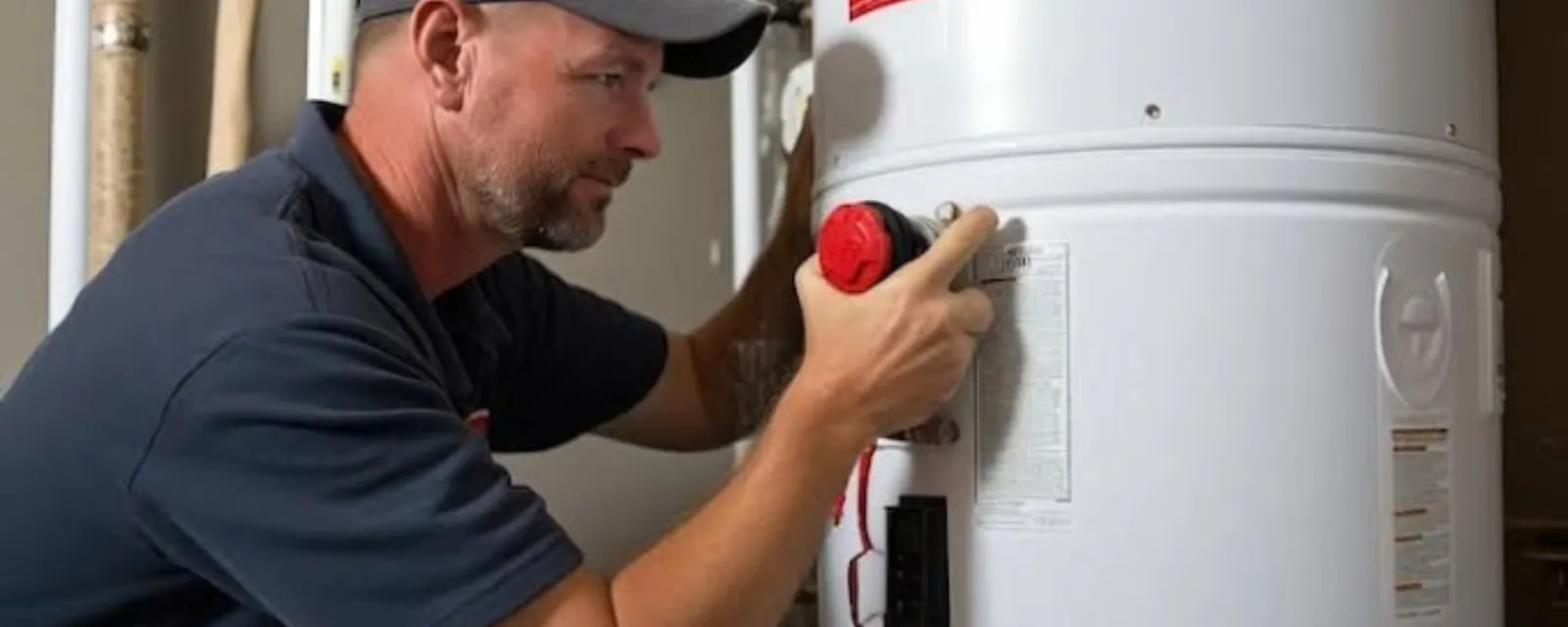
A ruptured tank turns water heater replacement in Coronado, CA into an emergency within minutes, because a 40 or 50 gallon tank can empty onto a garage or closet floor before anyone notices. Dispatch is open 24/7. Close the cold supply valve, cut the power or gas to the unit, and call (619) 927-0312.
Water heater replacement means removing a failed unit and installing a new one with the permit, bracing, venting and gas or electric connections that California rules call for. A same-day slot is possible when the schedule has room, and you get the price in plain terms before anyone starts.
Flooding from a failed tank: the first ten minutes
A tank that has split at the seam or is pouring from the base is finished. A repair call cannot save it, so the goal now is limiting damage until a plumber arrives, whatever the hour.
- Close the cold water shutoff above the tank. If the handle is stuck, close the main water valve for the house instead.
- Switch off the breaker for an electric heater, or turn a gas control to off. Do not step into standing water near live outlets.
- Open a hose bib or run the tub tap only if the plumber tells you to drain the tank. Otherwise leave it alone.
- Push water toward a floor drain with a squeegee or run a wet vac, and lift stored items onto shelves.
- Take photos of the damage and the unit's data plate before cleanup, since insurers and installers both ask for them.
Permit first: what the Coronado Building Division handout says
The City of Coronado Community Development Building Division's permit handout (Handout 301, March 2025) states that installation of water heaters requires a permit. Swapping out a failed tank counts as an installation, and so does fitting a tankless unit. In practice, ask whoever quotes the job who is pulling the permit, and walk away from anyone who suggests skipping it.
The same handout notes that existing gas lines may need alteration, and that requires gas line sizing calculations by a licensed plumber. This comes up when a larger tank or a tankless unit will draw more gas than the old pipe was sized for, so tell dispatch the current fuel and model.
State law adds one more item. Health and Safety Code 19211 calls for a replacement heater to be secured against earthquake movement, so strap hardware is part of the install. Permit rules vary, so for an unusual layout phone the Building Division before work starts.
Dead tank, wet floor?
Call (619) 927-0312 now. Dispatch is open nights and weekends.
What to do while a failed tank waits
Turn off the power at the breaker, or set the gas control to off or pilot. Close the cold water valve at the top of the tank to stop more water from entering. Hot water can scald, so keep hands and children away from any leaking water.
If water is pooling, move belongings out of the way and use a wet vacuum on the floor. If you smell gas, do not use switches or phones inside. Leave the building, then call 911 or SDG&E.
Choosing what goes in: tank, tankless or heat pump
A failed tank forces a decision under pressure. The table shows what each type asks of your home so you can pick quickly without regretting it later. No dollar figures appear because the price depends on your layout.
| Option | Fits best when | What to weigh |
|---|---|---|
| Gas storage tank | The existing gas line, vent and location already work | Fastest like-for-like swap, with a standby heat loss while the tank holds hot water |
| Electric storage tank | There is a dedicated circuit of the right size | Simple install, with recovery that is slower than gas after a heavy morning of use |
| Tankless gas unit | You want continuous hot water and can accept a larger install | Needs gas line sizing, venting and a permit, and needs flushing on a schedule |
| Heat pump (hybrid) tank | The room has open air space and a nearby drain for condensate | Uses much less electricity, but costs more up front and cools the room it sits in |
No hot water after the failure: how to get warm water back fastest
Many households learn the tank is finished only when showers go cold. A like-for-like tank swap is usually the quickest road back to hot water, because the gas or power, the vent and the plumbing connections already exist in the right place.
A switch to a tankless unit or a heat pump is a good plan, but it is better scheduled than rushed. Those units can need new gas sizing, a different vent, a dedicated circuit or condensate drainage. If the family needs hot water tonight, say so on the call. Same-day and after-hours work is possible when crews are free, and a plumber can lay out the quickest safe option.
Signs the tank is past repair
Replacement is the sensible call when one or more of these shows up, even if the unit still makes some hot water.
Water pooling at the base
A puddle under a tank with dry fittings means the inner tank has failed. No patch holds for long.
Rust at every hot tap
Rusty hot water at all fixtures but clean cold water points to a corroding tank interior.
Cracking and rumbling
Loud noises from hardened sediment, paired with any dampness, suggest the base is stressed.
Repeat part failures
A second element, thermostat or thermocouple in a short time hints that the whole unit is wearing out.
Corroded seams or fittings
White crust or rust at the top and bottom connections often means the tank shell is next.
What happens on replacement day
Shut off and drain
The plumber isolates water and fuel, then drains the failed tank so it can be moved without a second flood.
Remove the old unit
The failed tank is disconnected and carried out. Ask about haul-away when you hear the price.
Set and connect the new one
The new unit is placed on a drain pan where the space allows, connected to water, gas or power, and vented as the manufacturer specifies.
Strap, valve and test
Bracing goes on, a relief valve and discharge line are set, and the unit is filled, fired and checked for leaks.
Close out the permit
Paperwork for the Coronado Building Division follows the install, and you get care notes for the new unit.
What decides the cost of a replacement
Replacement prices swing widely, so a number given before anyone has seen your utility space is a guess. The number comes after someone has seen your utility space, so none is printed here.
Type and size of the new unit
A 40 gallon electric tank and a tankless gas unit are very different jobs and very different purchases.
Gas or electrical changes
A larger burner may need gas line sizing and a new run. A heat pump may need a dedicated circuit.
Venting and location
Moving a unit or changing vent type adds labor and materials.
Code items
Bracing, a drain pan, a relief valve and discharge line, and sometimes an expansion tank belong in the price.
Removal and permit
Hauling the old tank and filing the permit are part of the work and should be itemised.
Home insurance may cover water damage from a sudden tank failure, but it rarely pays for the heater itself. Keep your photos, call your insurer early, and know that we cannot promise any claim outcome.
Clear the way before the plumber arrives
- Park so the plumber can unload as close to the door as possible, and tell dispatch if street parking is tight, as it often is near Orange Avenue.
- Clear a path three feet wide from the entry to the heater and move cars out of a garage if the unit lives there.
- Find the main water shutoff and the gas meter location so they can be reached in seconds.
- Write down the old unit's size, fuel and any model number on the data plate.
- Keep pets and children away from the work area, and expect water to be off for part of the visit.
Water Heater Replacement questions in Coronado
A straightforward like-for-like swap commonly takes a half day. Changes to venting, gas lines or electrical circuits add time, and the plumber confirms the plan once the unit and space have been seen.
Yes. Dispatch runs 24/7, so a failed tank at midnight or on a Sunday is handled like any other call. A same-day appointment can be set when one is open, though no arrival time is promised. Until the plumber arrives, close the cold supply valve and switch off power or gas to the unit.
The installing plumber should. Installation needs a permit, and a failed-tank swap counts. Ask who is filing it when you hear the price, and phone the Building Division if anything about your layout is unusual.
Often yes, but the home needs a circuit of the right size, and a heat pump needs open air space and a condensate drain. Tell dispatch your panel situation and the plumber will check on site.
Yes. Under the state's earthquake strapping law, code section 19211, a replacement heater has to be secured against quake movement, and the straps go on during the install.
A tank spraying or pooling water needs prompt action. A slow weep at a fitting may wait for a same-day appointment if you close the supply valve, but a growing puddle is better handled right away.
Tell dispatch about parking, elevator use and the route to the unit when you call. In dense blocks around Orange Avenue, a call-ahead on access saves time on the day.
Nearby towns are part of the service area. For a home across the Silver Strand or the bay, read the notes for Chula Vista service and San Diego service.
Sources and standards behind this page
Every local rule or figure above comes from a published source, listed here so you can check it.
- City of Coronado Community Development, Building Division, Handout 301 (March 2025)
- California Health and Safety Code section 19211 (water heater earthquake bracing)