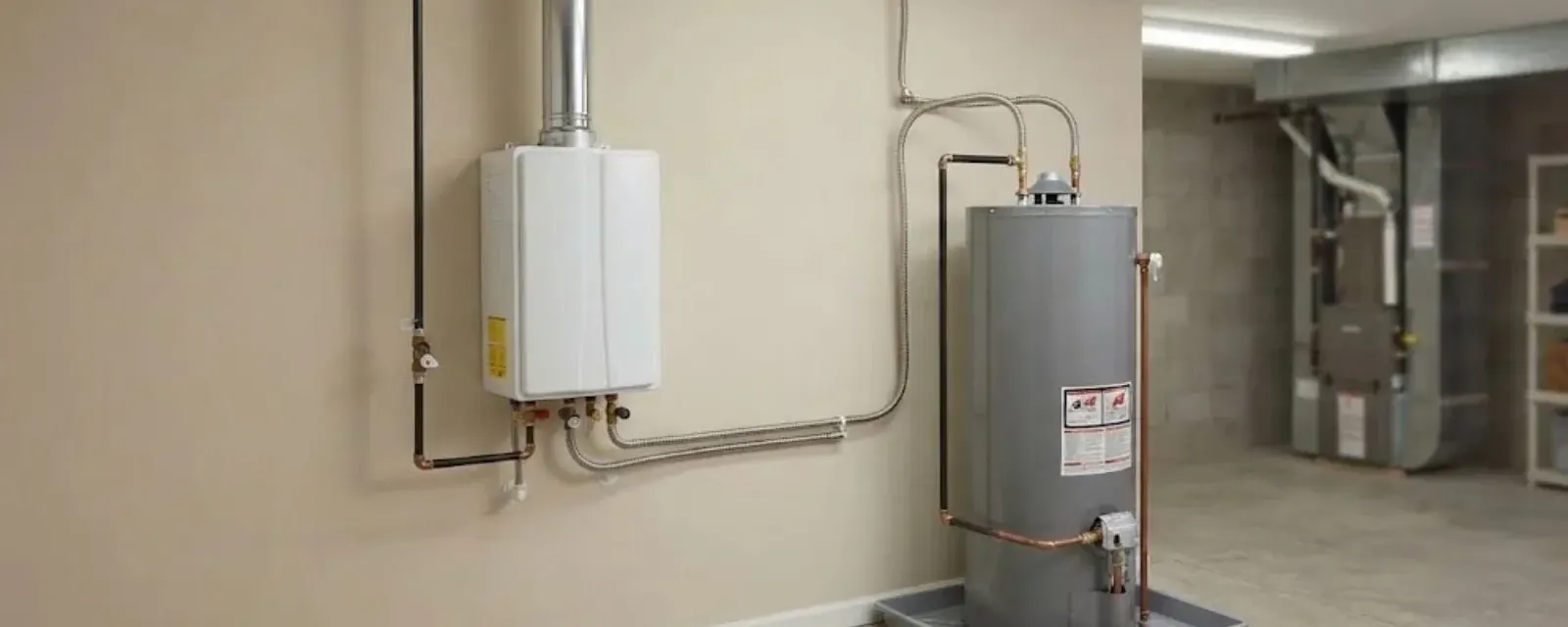
Tankless water heater service in Coronado, CA mostly comes down to one thing, keeping mineral scale out of a small heat exchanger. A tankless water heater heats water only while a tap is open, using a gas burner or electric elements and a narrow heat exchanger that scale clogs easily. Service covers flushing, repairs and new installs.
Call (619) 927-0312 if your unit is flashing an error code, running lukewarm or hasn't been flushed in a long time. Same-day appointments open up now and then, so ask, and expect a clear price before any work begins. A lost hot shower is annoying, but it is not an emergency the way a flooding tank is.
Why hard Coronado water makes descaling a calendar job
The 2023 Cal Am report for Coronado lists total hardness of 145 to 280 ppm as calcium carbonate, or 8.5 to 16.4 grains per gallon. That water is bought from the City of San Diego's Alvarado and Otay treatment plants, and on the USGS scale it is hard to very hard.
A tankless unit heats water in seconds across a thin metal exchanger, which is exactly where dissolved calcium drops out as scale. Even a thin layer reduces heat transfer, forces the burner to work harder and narrows the water path. The result is slower hot water, temperature swings and eventually an error code.
That is why descaling should be on a schedule, not a reaction to a fault. Waiting for a code means scale is already restricting flow. Installing a softener upstream cuts the load, and the softener and filtration page walks through sizing one. Tankless installs also need a permit from the Coronado Building Division.
Tankless flush and descale: how it is done and how often
A flush circulates a descaling liquid through the heat exchanger so dissolved scale leaves with the liquid. A pump pushes the liquid from a bucket through hoses connected to the unit's service valves, and the loop runs for the time the maker specifies, commonly around 45 minutes to an hour. Then the unit is rinsed with clean water and the inlet screen is cleaned.
Isolation or service valves are what make a flush possible. A unit installed without them needs those valves added first, and that is a small plumbing job that pays for itself on the first flush.
How often depends on the water and the use. With water this hard, many owners flush once a year, and heavy-use homes do it sooner. Check the manual for the maker's schedule and follow it, and note that skipping flushes is the most common reason a tankless unit loses output.
Tankless unit acting up?
Call (619) 927-0312 to book a flush or a diagnosis.
What to do if a tankless unit faults or leaks
Write down any error code on the display before doing anything else, because it tells the plumber where to start. Many units allow one power reset described in the owner's manual, but repeated faults mean stop resetting.
If water is leaking from the unit, close its water isolation valves and switch off power at the breaker. If you smell gas, do not touch anything electrical. Leave the building, then call 911 or SDG&E from outside.
Vinegar flush at home versus a professional flush
A do-it-yourself vinegar flush works for many owners, and it is worth being honest about what it can and cannot do.
DIY vinegar flush
- Needs service valves, a small submersible pump, two hoses and several gallons of white vinegar.
- Some makers specify white vinegar and others a branded descaler, so read the manual first.
- Mistakes include wrong hose connections, skipping the rinse and leaving a valve closed.
- Cannot show you burner condition, vent problems or stored error history.
- Can be a sensible yearly habit for a handy owner with working valves.
Professional flush
- Includes the same circulation, plus cleaning the inlet screen and checking water flow.
- Adds a look at the burner, vent, igniter and any stored error history.
- Can add service valves if the unit lacks them.
- Catches problems like a failing sensor or a cracked vent joint early.
- Gives you a record of when the unit was last serviced.
Signs your tankless unit needs attention
These symptoms usually build over months, and they are most common in homes that have never had a flush.
Hot water takes longer
Scale slows heat transfer, so the first hot water takes longer to reach the tap.
Temperature swings
Water goes warm, cold and hot again because the unit cannot hold a steady output.
An error code returns
Flow, ignition, exhaust or overheat codes are often scale related, though not always.
Weak flow at taps
A clogged inlet screen or scaled exchanger reduces what reaches the fixtures.
Rumbling or ticking
Steam bubbling beneath a scale layer produces unusual noises while heating.
Is tankless right for your Coronado home?
A tankless unit saves floor space and removes standby loss, because it does not keep fifty gallons hot around the clock. It also gives an endless supply, as long as the demand stays within its flow rating. Run two showers and a dishwasher at once and a small unit can struggle.
Sizing starts with the highest flow you will ask for at the same time, and with how much the incoming water needs to be heated. A plumber looks at fixtures, gas supply and vent route before suggesting a model. Tankless units cost more to buy and install than a like-for-like tank, and they ask for upkeep the tank version avoids.
If you are weighing a switch, the installation page describes the permit, bracing and gas line steps that apply to a new unit.
What a tankless service visit includes
Read the history
The plumber pulls error codes and asks about changes in water temperature or flow.
Isolate and circulate
Service valves are closed, hoses connected and descaling liquid circulated per the maker's instructions.
Rinse and clean
The exchanger is rinsed, the inlet screen cleaned and valves reopened with air purged from lines.
Test and report
The plumber checks output temperature, flow and venting, then tells you what was found and when to repeat the flush.
What affects the price of tankless service
Service is priced by what the unit needs, not by a standard formula. The price is set out before the visit begins, and this page leaves dollar amounts out on purpose.
Valves already installed
Units with working service valves flush quickly. Units without them need valves first.
Scale level
A unit that has gone years without a flush may need a longer or repeated circulation.
Fuel and model
Gas units add burner and venting checks. Some models need special adapters or descaler.
Access
A unit mounted high or in a tight closet takes longer to service safely.
Repairs found
A failed sensor, igniter or flow valve is quoted separately once found.
Maintenance flushes are not covered by home insurance. Sudden water damage from a failed connection might be, so ask your insurer.
Tankless Water Heater questions in Coronado
Follow the manual, but with the hard water in Cal Am's Coronado system many owners flush once a year. Heavy use or a visible drop in output suggests doing it sooner.
Often yes, if the manual allows it and your unit has service valves. Some makers name a specific descaler. A professional flush adds inspection of the burner, vent and error history.
Codes for flow, ignition, exhaust or overheating can come from scale, a clogged inlet screen or a failing sensor. The code list in the manual points to the cause, and a plumber confirms it.
Yes, a permit is required, and existing gas lines may need alteration, which a licensed plumber must support with sizing math. The Coronado Building Division can answer questions about your address.
A softener upstream reduces the scale that forms in the heat exchanger. It needs to be sized to your household and water, and it adds its own upkeep. See the softener page for the details.
Usually not. A lost hot shower is inconvenient but rarely urgent. A gas smell is different. Leave the building, then call 911 or SDG&E from a safe place.
Yes, nearby towns are in the service area. Water supply differs by district, so the Chula Vista page and San Diego page cover what changes there.
Sources and standards behind this page
Every local rule or figure above comes from a published source, listed here so you can check it.
- City of Coronado Community Development, Building Division, Handout 301 (March 2025)
- California American Water, Coronado system 2023 annual water quality report