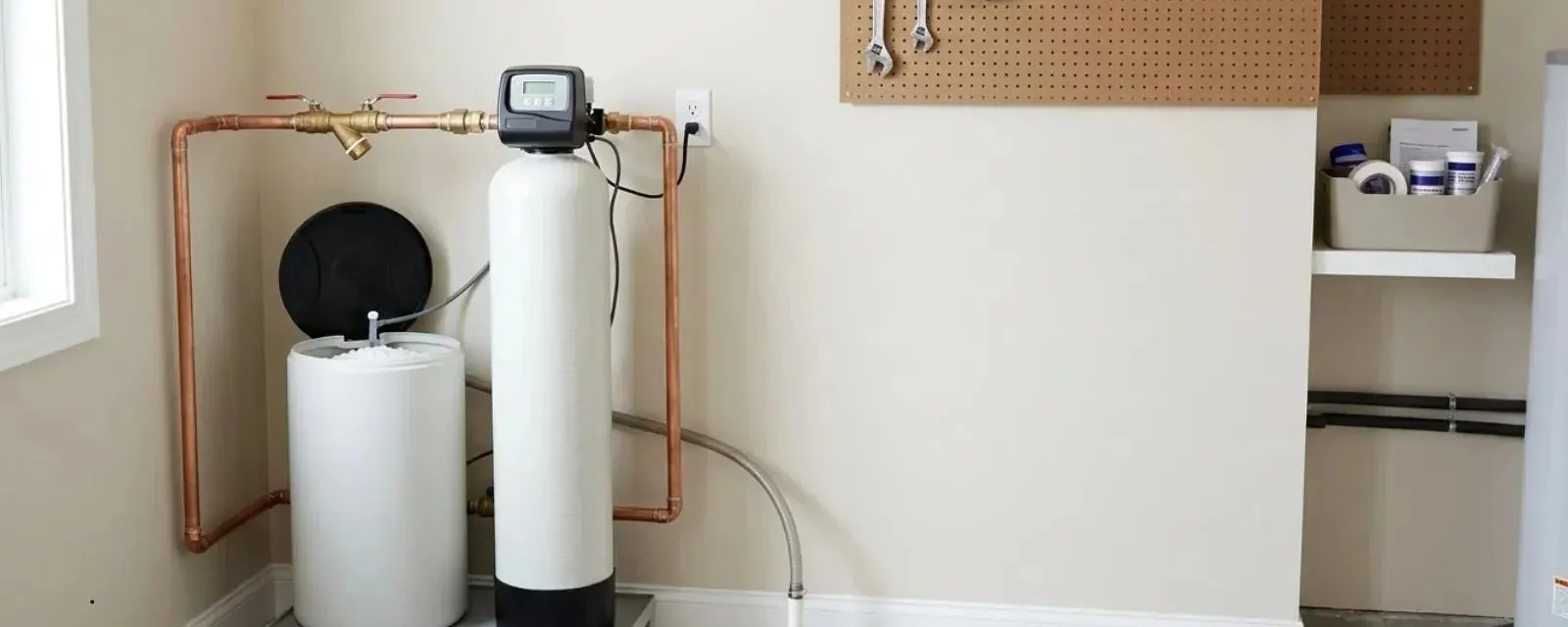
Water softener and filtration questions in Coronado, CA usually start with white crust on fixtures, spotty glassware or a water heater that rumbles. A water softener swaps the calcium and magnesium that cause hardness for sodium or potassium, which stops scale from forming. Filtration is a different job, and mixing up the two is where most buyers go wrong.
Call (619) 927-0312 to talk through sizing, installation or a softener that has stopped working. Same-day appointments are sometimes open, and the price is made clear before work starts. This is planned work, so expect a conversation about your water, your household and your plumbing before anyone sells you a unit.
What Cal Am's Coronado numbers mean for a softener decision
Treated water in Cal Am's Coronado system comes from the City of San Diego's plants, and the 2023 report puts hardness between 8.5 and 16.4 grains per gallon. That sits in the hard to very hard bracket. For a household, it means scale is a constant and a softener is a reasonable tool, not a luxury.
The same report lists pH in the Coronado distribution system at 7.9 to 8.2, slightly alkaline. A softener does not change pH meaningfully, so it will not fix any taste or corrosion questions tied to it.
The smart move is to test your own tap, since water can change between a treatment plant and your faucet. Then ask Cal Am for its annual water quality report so you have current numbers in hand before choosing a unit size.
How a softener gets sized from grains per gallon
Sizing is arithmetic, not guesswork. The goal is a unit that regenerates every few days rather than every night or every month.
Find your hardness
Use a test strip, a lab test or the latest Cal Am report. Express the result in grains per gallon.
Estimate daily water use
Count people and fixtures. A household using 300 gallons a day is a reasonable example for a family of four.
Multiply for grains per day
Take 300 gallons at 12 grains per gallon. That is 3,600 grains to remove each day, or about 25,000 a week.
Match capacity to the gap
A 32,000 grain unit in that example regenerates roughly every eight or nine days. Undersizing means constant regeneration, which wastes salt and water.
Scale or a stalled softener?
Call (619) 927-0312 to talk through sizing or repair.
Softener, conditioner, carbon filter or reverse osmosis
These products solve different problems, and the wrong choice is the most common source of disappointment.
| Product | What it does | What it does not do |
|---|---|---|
| Salt-based softener | Removes hardness minerals, so scale stops forming | Does not remove most contaminants, and adds a small amount of sodium or potassium |
| Salt-free conditioner | Changes how scale forms so it clings less to surfaces | Does not remove hardness, so soap and spotting stay much the same |
| Carbon filter | Reduces chlorine taste and odor and some organic compounds | Does not soften water or stop scale |
| Reverse osmosis at one tap | Treats drinking water to a much finer level | Does not protect the whole house, and wastes some water while it runs |
What a softener does not do
A softener is not a drinking water purifier. It does not remove bacteria, lead, PFAS or most other contaminants, and it is not a substitute for a filter chosen against a lab test of your tap. Anyone who tells you otherwise is overselling.
Salt is the other trade-off. Salt-based units add sodium or potassium and discharge brine when they regenerate, so people on low-sodium diets should ask a doctor, and discharge rules can vary. Ask the Coronado Building Division if a permit is required for your install.
Water conditioner repair: when a unit stops softening
Most softener and conditioner faults come from a short list. A salt bridge or mushed salt in the brine tank stops the unit from making brine, a stuck bypass valve lets hard water through, and a clogged injector or a worn control valve prevents regeneration. Resin that has aged or been exposed to chlorine gradually loses capacity.
A plumber can check the bypass, brine line, drain line and control settings, then say whether a repair makes sense. Some control heads and resin tanks are not worth repairing, and you will hear that plainly. If the unit is also feeding a water heater, a flush of the heater may be due, covered by water heater repair.
Before you buy or install a unit
- Test your tap water or get the latest Cal Am water quality report, and write down the hardness in grains per gallon.
- Count the people in the home and estimate daily water use so the unit can be sized, not guessed.
- Decide whether you also want drinking water treatment, since that is a separate filter or reverse osmosis system.
- Pick a spot near the main water line with a drain, a power outlet and room to load salt.
- Ask about bypass valves, since a unit with no bypass is hard to service without shutting the house water off.
- Ask about the plan for the drain connection and any rules that apply before you commit.
What decides the cost of softening and filtration
Costs range from a single filter to a whole-house system, so a figure without the facts would mislead you. Pricing is laid out before the job begins, and this page skips dollar amounts because they would mislead.
System type and capacity
A small conditioner, a mid-size softener and a whole-house setup with a pre-filter differ in hardware cost.
Installation layout
A unit beside the main line with a nearby drain is a simple install. Long pipe runs raise labor.
Drain and power needs
A softener needs a drain for regeneration water and an outlet. Missing either adds work.
Salt or media supply
Salt, filter cartridges and resin replacement are ongoing costs after the install.
Repair versus replace
Old control heads and resin tanks may cost more to repair than a new unit saves.
Home insurance typically does not pay for a softener as an upgrade. Ask your insurer about water damage if a unit's connection ever fails, because we cannot promise coverage.
Water Softener and Filtration questions in Coronado
The 2023 Cal Am report shows hardness of 145 to 280 ppm for Coronado, which works out to 8.5 to 16.4 grains per gallon. Test your own tap, since a treatment plant's numbers are not always what reaches your faucet.
Multiply daily gallons used by your hardness in grains per gallon, then choose a capacity that regenerates every few days. A plumber can do this math with your numbers at the visit.
No. It treats hardness only. Drinking water concerns need a filter or reverse osmosis unit chosen from a lab test, and a softener adds a small amount of sodium or potassium.
It works differently. It changes how scale forms rather than removing hardness minerals, so spotting and soap behavior stay close to what you have now. Many people find that a poor trade for very hard water.
Frequent causes are a salt bridge, an empty brine tank, a stuck bypass valve, a clogged injector or a worn control head. A plumber checks each in order before suggesting repair or replacement.
Permit rules vary, so ask the Coronado Building Division at (619) 522-7331 before the install. They can tell you if your layout, drain connection or plumbing changes need one.
Check the brine tank about once a month and refill before it runs low. Clean the tank and look for salt bridges once or twice a year. Use varies with hardness and household size, so a plumber can set a refill rhythm.
Our area covers nearby towns. Hardness varies by water district, so for homes elsewhere read the Chula Vista or San Diego page and test your own tap first.
Sources and standards behind this page
Every local rule or figure above comes from a published source, listed here so you can check it.
- City of Coronado Community Development, Building Division, Handout 301 (March 2025)
- California American Water, Coronado system 2023 annual water quality report