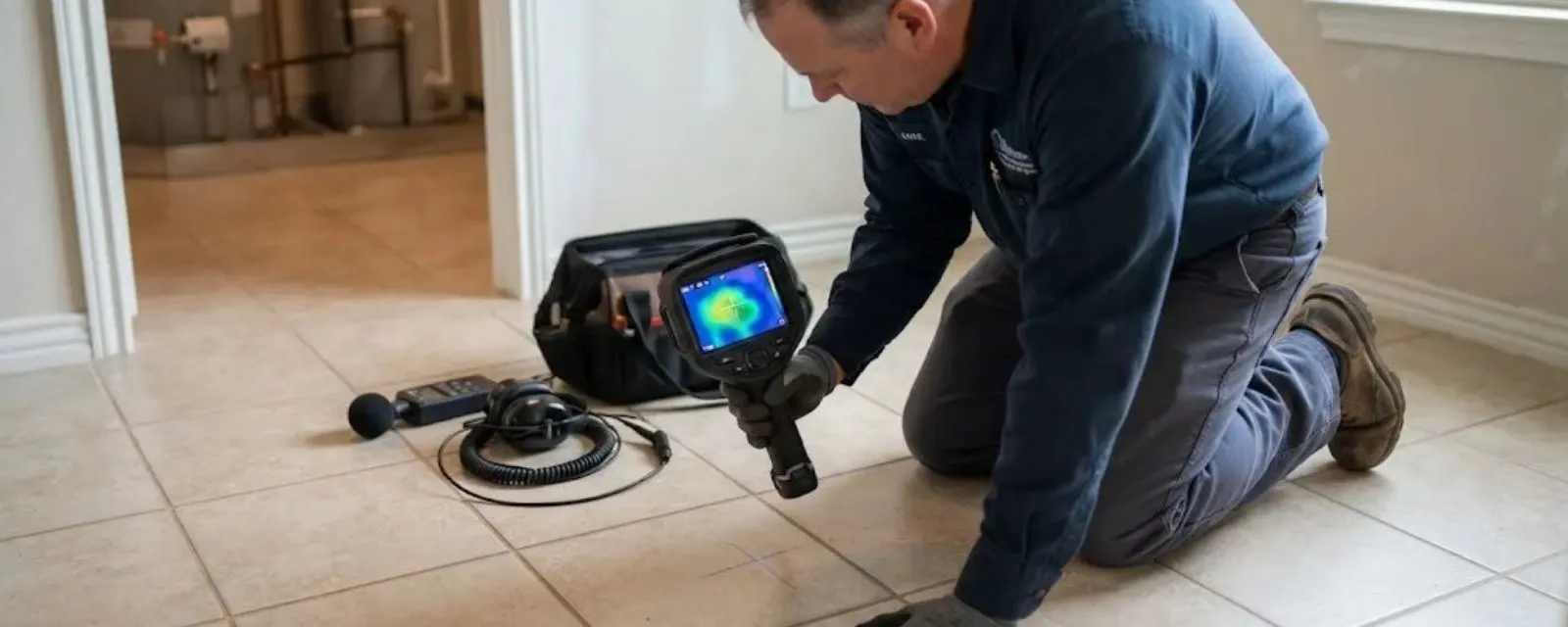
Water that you cannot see is still water you are paying for, and a leak that is actively soaking drywall or a floor cannot wait for Monday. Leak detection in Coronado, CA is the process of locating the exact spot where a pressurized pipe is losing water, using instruments instead of opening walls at random. Our line is staffed 24/7. While you wait, close the water main, keep clear of wet electrical, and photograph the damage.
Most people reach us after noticing one of a few signs. The meter dial moves when every tap is off, the bill jumped without a reason, a ceiling has a brown ring, a floor feels warm underfoot, or the yard stays soggy in dry weather. The sections below match each of those signs to the usual causes, the tools a dispatched plumber typically brings, and what a sensible repair looks like.
Active leaking: stop the flow first
If water is dripping through a ceiling, spraying from a wall or pooling on a floor right now, treat it as an emergency. Finding the source is the plumber's job. Your job in the next few minutes is to limit the damage, and that comes down to a short list of actions that anyone can do safely.
Calls are taken overnight and on weekends, and a same-day visit is possible when the schedule allows. No arrival time is promised, so put the wait to good use.
- Close the main shutoff valve at the house. It is usually where the line enters near a hose bib or in a garage, basement or utility closet. Turn it clockwise until it stops.
- If water is near outlets, light fixtures or a breaker panel, leave the power alone in that area and stay out of standing water. Switch off the circuit only if you can reach the panel while dry.
- Open the lowest faucet in the house to drain pressure out of the pipes, then place buckets under active drips and move rugs and furniture out of the wet zone.
- Photograph the stain, the meter reading and any wet materials before you clean up. Insurers and adjusters usually ask for that record.
- Keep people and pets out from under a sagging or bulging ceiling. Wet drywall is heavy and can drop without warning, so wait for the plumber instead of poking at it.
Meter still running or a high water bill
A meter that keeps moving while every fixture is off is the clearest sign of a leak, and a bill that climbs with no change in habits is the second clearest. The loss may be a toilet flapper seeping into the bowl, a dripping valve, a failed irrigation fitting, or a pressurized line hidden in a wall, floor or the ground. Each wastes water at a different rate.
A dispatched plumber starts by confirming the meter is moving with the house isolated, then closes the main valve at the house and watches again. If the meter stops, the leak is inside the home. If it keeps running, the loss is on the pipe between the meter and the house, which points to a buried line. That single test removes half the guesswork before any equipment comes out.
A running meter does not always mean a break. Ice makers refilling, a softener regenerating or a toilet cycling can all turn the dial briefly, which is why the longer test below matters. A bill spike can also come from a billing period with extra irrigation or guests. If the meter is steady with everything off, the bill is probably about use, not a leak.
Water showing up where it should not?
Call (619) 927-0312 any hour and describe what you see. Same-day slots open up often enough that calling early is worth it.
A meter test you can run before we arrive
This takes about thirty minutes and gives the dispatcher real information. Do it only if no water is actively flooding anything.
- Turn off every tap, stop the dishwasher and washing machine, and make sure no one flushes a toilet during the test.
- Pause irrigation timers and confirm that the ice maker, humidifier and any water treatment equipment are not mid-cycle.
- Open the meter box carefully and wipe the dial. Many meters have a small flow indicator that turns with even a tiny flow, so check it first.
- Write down the full reading, take a photo of it, then leave the water off for at least twenty to thirty minutes.
- Read the meter again. Any change in the numbers, or a flow indicator that is still turning, means water is escaping somewhere.
- Close the house main valve and look again. A stopped meter points to a leak inside the house, and a moving meter points to the buried line outside.
What Cal Am says about leaks you cannot see
California American Water, which supplies the Coronado system, points out on its customer page that plenty of leaks go unnoticed yet still inflate usage. In practice that means a slow leak can run for weeks with no wet spot to give it away, and the first hint is often the bill. If the meter test shows water moving, do not wait for a stain to appear.
The utility staffs an around-the-clock emergency line, 1-888-237-1333, for trouble on its side of the system. If water is bubbling up at the street or the meter itself is gushing before it reaches your house, call that number and then call us for anything inside your property line. Permit rules also help here. The city's permit handout lists leak repairs on pipes, valves and fixtures as exempt, so a simple fix generally skips the permit step.
Wet ceilings and stained walls
A brown ring on a ceiling or a bubbling patch of paint on a wall is a symptom, and the stain is often not directly under the leak. Water travels along joists, down pipe penetrations and across drywall before it shows. A plumber traces it back by moisture mapping the surface, then checks the supply lines, drain lines and fixtures above and beside the stain.
Upstairs bathrooms are the usual suspects, since shower pans, tub drains, toilet supply lines and supply valves all sit above living space. Rooftop causes such as flashing or a failed seal are roofing work, not plumbing. We separate the two by running the plumbing on its own. If the stain grows only when fixtures are used or the system is pressurized, it is a plumbing leak.
Wet insulation and drywall hold moisture long after the source is fixed. Ask the plumber what needs to open and dry out, because covering a damp wall with paint invites mold and a repeat stain.
Leaks under the house or in a crawlspace
Not every Coronado home has a crawlspace, and we do not assume one. Where a raised floor does exist, the pipes run in the dark, and the signs show up elsewhere: a musty smell, a floor that feels soft or springy, buckling wood planks, or a meter that moves when the house is quiet. Standing or dripping water under the floor is a clear reason to call.
A plumber will check the exposed supply lines, drain lines and valves for drips, corrosion at joints and wet insulation. Pressure testing isolates which line is losing pressure, and listening gear confirms the area. Fixing a leaking joint or a short run of pipe is usually quick work once it is found.
Wear closed shoes and gloves if you must look yourself, and stay out of tight spaces with standing water near wiring. Many crawlspace leaks are in plain view with a flashlight, but the person doing the looking should not be crawling past electrical.
Buried line leaks between the meter and the house
When the meter runs and the house main valve is closed, the leak is underground. Signs include a soft or unusually green patch of yard, a wet stripe along a driveway edge, sudden drops in water pressure and the sound of running water near the meter. A buried line cannot be inspected by eye, so the work is about pinpointing before digging.
Line tracing locates the pipe's path, then acoustic listening along that path finds the point where escaping water makes noise. For plastic pipe, which carries sound poorly, a tracer gas method pushes a harmless gas mix into the line and detects it at the surface. The goal is one small excavation in the right place instead of a trench.
Repair choices for a buried line are covered on our water line repair page, including when a section can be replaced and when it makes sense to replace the full run.
How a plumber finds a hidden leak
No single tool finds every leak. Dispatched plumbers typically choose from these methods based on pipe material, location and symptoms.
| Method | What it detects | Best used for |
|---|---|---|
| Acoustic listening | The hiss or vibration of pressurized water escaping | Pressurized lines in walls, floors and the ground |
| Thermal imaging | Temperature differences caused by wet materials or hot water lines | Warm floor spots and wall or ceiling moisture |
| Pressure testing | A pressure drop in an isolated section of pipe | Confirming which line is leaking before opening anything |
| Tracer gas | Gas escaping from a leak and reaching the surface | Quiet leaks in plastic pipe or buried lines |
| Line tracing | The route and depth of a buried pipe | Locating the line before listening or digging |
Sprinklers, pools and the meter box
Irrigation systems leak more often than people expect, since fittings sit in soil with constant pressure cycles. A broken head, a cracked lateral or a stuck valve can run every time the timer fires, and a meter that moves overnight is a common sign. Shutting off the irrigation valve and repeating the meter test tells you whether the sprinkler system is the source.
Pool and spa leaks are a separate specialty. A plumber can pressure test the supply and return lines, but the shell, skimmer and equipment pad are pool trade work, so we say so early rather than guess.
Water pooling in the meter box is worth a close look. If the leak is at the meter itself, call the Cal Am emergency line. If water is leaking from a fitting on the house side of the valve, a plumber can usually fix it quickly.
What decides the price of finding and fixing a leak
You get a clear price before work starts, and the final number depends on a few concrete things. Understanding them helps you compare quotes honestly and avoid surprises.
Where the leak is
A dripping valve under a sink is a short visit. A leak under a finished floor or in a buried line takes more tools, more time and often some access work.
How hard it is to locate
A leak that shows itself in a minute costs less than a quiet one that needs listening, thermal imaging and pressure isolation to pin down.
Pipe material and size
Copper, PEX, galvanized steel and plastic each repair differently, and larger service lines take longer to cut and rejoin.
Access and finish work
Opening a wall or lifting flooring is part of the job. Patching drywall, paint or tile is usually separate from the plumbing repair.
Time of the call
After-hours and weekend dispatch can be priced differently from a daytime booking, and you are told before work begins.
Many homeowner policies cover sudden water damage but not the slow wear that caused it, so ask your insurer before repairs begin. Keep your photos, the meter readings and the plumber's written findings, since they usually support a claim.
After the leak is found: repair, permits and next steps
A spot repair is the most common outcome. The plumber cuts out the damaged section and rejoins it, replaces a failed valve or tightens a fitting. The same handout draws a line at bigger work. Swapping out piping behind a wall face or below the floor does need a permit. If your job might cross that line, ask the Building Division before work begins.
If one leak points to many, the conversation turns to larger fixes. A pipe leaking under a concrete floor is covered under slab leak repair, a failed section that has split open under burst pipe repair, and a system with repeated pinhole failures under whole-house repiping. We lay the options out before any work begins.
Service extends across the bay to Chula Vista and San Diego addresses. A different water utility serves parts of those areas, so the emergency number to call for a street-side leak can change. Ask the dispatcher if you are unsure which utility to contact. You can reach us any time through our contact page.
Leak Detection questions in Coronado
Turn off every fixture and appliance, read the meter, wait twenty to thirty minutes and read it again. If the numbers moved or the small flow indicator keeps turning, water is escaping. Closing the house main then tells you whether the leak is indoors or underground.
Yes. Yes. Someone answers through the night and all weekend, and a visit the same day can be arranged if a plumber is free. There is no promised arrival time. While you wait, close the house main, stay clear of wet electrical, photograph the damage and note the meter reading.
Slow leaks rarely leave a visible puddle. A toilet flapper, a sprinkler fitting or a pinhole in a wall pipe can add up over a billing period. Cal Am notes many leaks go unnoticed, so a meter test is the quickest way to separate a leak from higher use.
Usually only a small section. Acoustic listening, thermal imaging and pressure tests narrow the leak to a spot, so the opening is about the size of the repair. Patching drywall or flooring afterward is typically separate work, and the plumber explains it before starting.
Fixing a leak in a pipe, valve or fixture is exempt under the city's handout, but replacing piping behind the face of a wall or below the floor does need a permit. For a specific job, the Building Division can be reached at (619) 522-7331.
Water bubbling up in the street or a gushing meter should go to the utility first. For Cal Am's Coronado system the 24/7 emergency number is 1-888-237-1333, and other utilities list their own on the bill. Call us for leaks at your house, in the yard or inside the walls.
We can pressure test the plumbing lines that feed and return from a pool or spa. The shell, skimmer and pool equipment belong to pool specialists, and we tell you early if the problem looks like it sits there rather than in the pipes.
No. A slab leak is in a pipe under the house floor, while a buried line leak is on the pipe running through the yard to the house. The signs overlap, but the repair methods differ, so the meter test and a walk of the property decide which one it is.
Sources and standards behind this page
Every local rule or figure above comes from a published source, listed here so you can check it.
- City of Coronado Community Development, Building Division, Handout 301 (March 2025)
- California American Water, Coronado system 2023 annual water quality report
- City of Coronado municipal code and lateral information page (sewer lateral ownership)