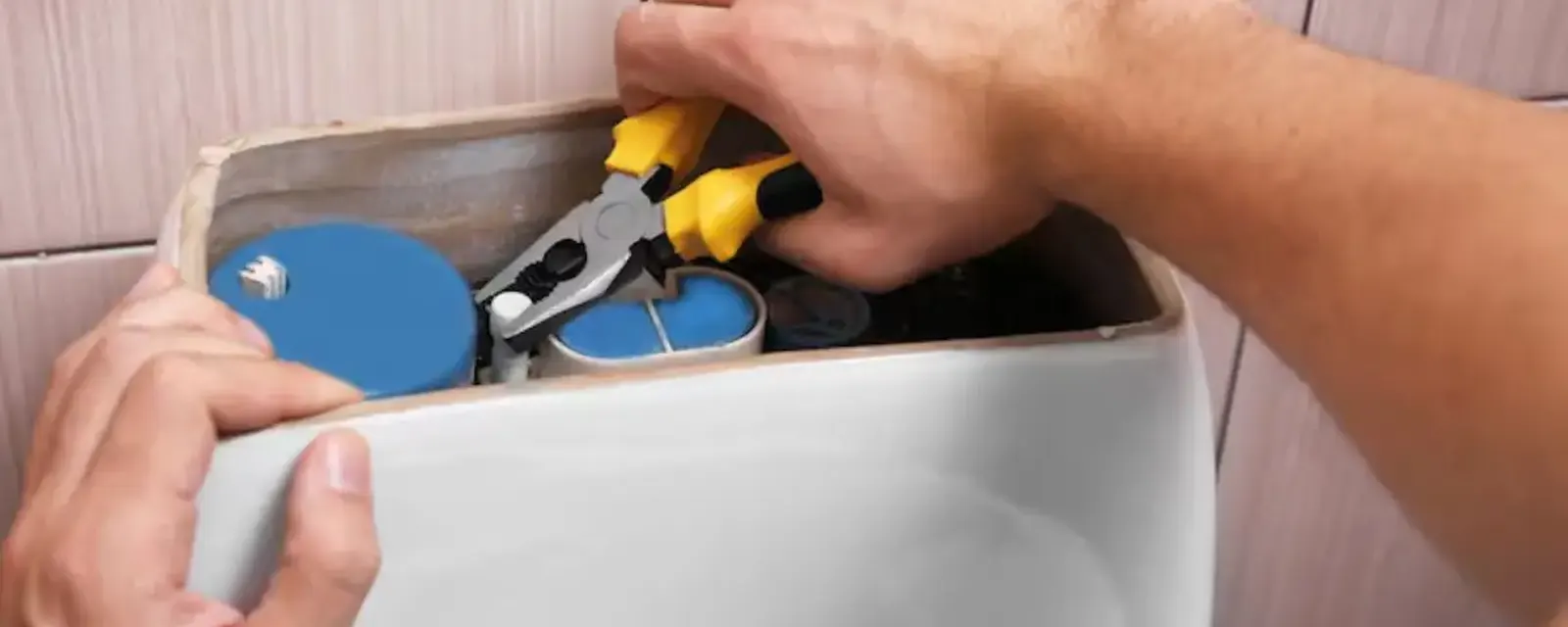
Start here: what a flange is and how you fix one
The toilet flange is the ring that bolts the toilet to the floor and connects its outlet to the drain pipe below. If it is cracked, rusted, loose or sitting too low, the toilet rocks, the wax seal fails and water seeps out around the base.
The fix depends on the damage. A flange sitting a little low gets an extender or spacer. A cracked or broken ring gets a repair ring. A flange that is damaged where it joins the pipe needs to be replaced, and that is where the work can move below the floor.
Signs the flange, not the toilet, is the problem
Before you buy anything, check whether these symptoms match your bathroom.
Toilet rocks side to side
A loose toilet usually means the closet bolts are not holding, often because the flange ring is cracked or the bolt slots have worn through.
Water at the base after flushing
A failed wax seal lets water escape at the base. Reseating the toilet fixes it only if the flange height is right.
Sewer odor in the bathroom
A gap between the toilet outlet and the flange lets drain gas into the room.
Soft or stained floor near the toilet
Slow seepage can rot the subfloor, which then fails to hold the flange firmly.
Visible rust or cracks on the flange
Remove the toilet and look. A metal flange with flaking rust or a plastic one with a cracked ring will not seal reliably.
Which repair matches which flange problem
| What you find | Common fix | Typical difficulty |
|---|---|---|
| Flange sits below the finished floor | Flange extender or spacer rings, or a thicker wax ring as the manufacturer allows | Moderate, DIY if the pipe is solid |
| Cracked or broken top ring, pipe still sound | Repair ring screwed to the floor over the old flange | Moderate, DIY with care |
| Bolt slots broken or bolts will not stay put | New closet bolts and a repair ring or flange replacement | Moderate |
| Flange corroded or glued poorly to the pipe | Replace the flange, sometimes cutting back the pipe | Call a plumber |
| Pipe under the floor cracked or loose | Replace pipe below the floor, usually opening floor or ceiling | Call a plumber and permit office |
Replacing the wax ring and seating the toilet again
This sequence applies when the flange is sound and only the seal has failed. Follow the toilet and wax ring manufacturers' instructions where they differ.
Shut off water and empty the toilet
Close the supply valve, flush, and sponge out the tank and bowl. Disconnect the supply line.
Remove the toilet and cover the opening
Remove the nuts from the closet bolts, rock the toilet loose and lift it off. Stuff a rag in the pipe to stop odor and keep tools out.
Scrape the old wax and inspect the flange
Clean the flange completely. Check for cracks, rust, loose screws and whether the flange top is level with the finished floor.
Fix the flange before the toilet goes back
Add a repair ring, extender or new bolts as needed. Do not skip this, because a new wax ring over a bad flange will fail again.
Set a new wax ring and the toilet
Place the new ring, lower the toilet straight down over the bolts, press evenly, tighten the nuts alternately until snug and reconnect the supply.
A job for you or a job for a plumber
DIY is reasonable when
- The flange is securely fastened and only needs a new wax ring or closet bolts.
- A repair ring or extender can be screwed to a solid floor.
- The floor around the toilet feels firm when you press on it.
- You can lift the toilet comfortably or have a helper, since a toilet is heavy and breakable.
Call a plumber when
- The floor around the flange is soft, spongy or stained.
- The flange is rusted through or the drain pipe below it is damaged.
- The toilet leaks again soon after a fresh wax ring and a repair.
- You see signs that the work will require opening the floor or the ceiling below.
Flange height, the detail that makes or breaks the seal
The flange should sit on top of the finished floor, not under it. When new tile or flooring has been added, the flange often ends up lower than it was designed to be, leaving a gap the wax ring cannot always bridge.
Extenders and spacer rings raise it back up. Choose one that matches your flange and pipe type, and follow the instructions with it. A very thick wax ring stacked on a low flange is a weak patch, so measure first and fix the height instead of guessing.
Why flange repairs vary so much in price
Two bathrooms with the same leak can need very different amounts of work. Expect the price to be spelled out before work begins, once the toilet is off and the flange has been seen.
Flange material and condition
A cracked plastic ring is a quick fix. A corroded metal flange tied into old pipe takes more cutting and rebuilding.
Floor damage
Rotted subfloor must be repaired so the flange has something solid to screw into. That is carpentry on top of plumbing.
Access to the pipe below
A ground-floor bathroom over a crawlspace is simpler than a second-floor bathroom where the pipe sits in a ceiling.
Fixture handling
Heavy one-piece toilets, wall-hung models and tight bathrooms add handling time.
Permit steps
If the work includes replacing pipe below the floor, permit and inspection steps add to the schedule.
Insurance typically does not cover a worn seal or flange, but it may respond if a sudden failure caused water damage, so photograph the area and call your carrier before cleaning up.
Tools and parts to gather before you pull the toilet
- A new wax ring or a manufacturer-approved wax-free seal that fits your toilet outlet.
- A new set of closet bolts and a flange repair ring or extender sized for your flange.
- A putty knife, rags, a bucket and a sponge for the water that remains in the bowl and tank.
- A wrench for the supply valve nut and the closet bolt nuts, plus a hacksaw if the bolts are rusted.
- A helper or a dolly, since lifting a wet toilet alone is how floors and backs get damaged.
- Plastic sheeting or an old towel to set the toilet on, with the base side up, after it is removed.
Related fixes you may run into once the toilet is off
If the toilet keeps clogging after you reset it, the cause may be in the drain rather than the flange, and our page on drain cleaning explains how stoppages are cleared. If a bathroom floor is damp and the flange is dry, the leak may be a supply line or the tank, which a toilet repair visit can sort out.
Our line also dispatches to Chula Vista and San Diego, and the same flange problems appear in homes on both sides of the bay whenever old flooring is replaced and the flange height was not adjusted.
Coronado note: when a flange job needs the Building Division
In its March 2025 Handout 301, the Coronado Building Division exempts removing and reinstalling a water closet, which is the code term for a toilet, so long as no valves, pipes or fixtures are replaced or rearranged. So pulling your toilet to replace a wax ring or reset the bolts does not need a permit by that handout. Replacing the toilet with a different model or moving it does not fit that exemption, so ask first.
The same handout says replacement of piping behind the face of the wall or below the floor requires a permit, and that replacing a defective concealed drain pipe is treated as new work. A flange that needs concealed pipe work is therefore a call to the Building Division at (619) 522-7331 before anyone cuts the floor. A flange repair done from above, with a repair ring on sound pipe, is a different matter.
Need a plumber now?
The 24/7 line is open for Coronado homes and businesses.
Questions about this topic in Coronado
The flange is probably cracked, loose or sitting lower than the floor. A new wax ring cannot fix a wobbling base. Remove the toilet again, check the flange height and its screws, and add a repair ring or spacer so the toilet sits level and solid.
The flange should sit on top of the finished floor. If flooring was added after the original install, the flange may be lower and needs an extender or repair ring to bring it up. Follow the instructions on the part and confirm the pipe below is sound before relying on it.
It depends on the product and the situation. Some are approved for specific flange heights or reuse, and some are not. Whichever you choose, follow the manufacturer's directions and check that the flange is solid, because no seal fixes a damaged flange.
According to the City of Coronado Building Division handout, removing and reinstalling a toilet is exempt when no valves, pipes or fixtures are replaced or rearranged. Anything involving piping below the floor requires a permit, and the Coronado Building Division can answer questions about other situations.
Signs include a flange that moves when pushed, water that appears at the base even with a good seal, or a pipe that looks cracked or loose inside the opening. A plumber can inspect with a camera. Do not guess, because hidden damage means concealed work.
Lift with your legs, keep it close to your body, and use a helper for heavy models. Drain it first to lighten the load. Set it on a towel or cardboard so the porcelain does not chip, and never grip the tank or the bowl rim alone.
Sources and standards behind this page
Every local rule or figure above comes from a published source, listed here so you can check it.
- City of Coronado Community Development, Building Division, Handout 301 (March 2025)