What the numbers mean in a kitchen and a water heater
Hardness is the amount of dissolved calcium and magnesium in water, and grains per gallon is one way to measure it. At 8.5 to 16.4 grains per gallon, water leaves visible scale on fixtures, film on glass and mineral crust inside heating elements and tank bottoms. Over years, that can shorten appliance life and cut efficiency.
Hard water is mainly a nuisance and a maintenance cost, not a safety issue. Soap lathers less, shower doors cloud over and kettles furr up. Whether you treat it comes down to how much cleaning and appliance wear you are willing to tolerate, which is what the rest of this guide sorts out.
Signs the water at your tap is hard
Most households recognize these without testing, and several together are a clear pattern.
White crust on faucets and showerheads
Chalky buildup around aerators and spray holes narrows flow and sprays water sideways.
Spots on dishes and glass
Dried droplets leave cloudy rings that return after every wash, even with a rinse aid.
Stiff laundry and dull colors
Minerals can leave fabric feeling rough and make soap rinse out poorly.
Soap that will not lather
You use more shampoo or detergent for the same suds, and a scummy film forms in tubs and sinks.
Noisy or slow-heating water heater
Sediment collects at the base of a tank and can cause rumbling and slower recovery over time.
Where hardness hits hardest
Not every part of the house suffers equally. Heat accelerates scale, so hot water systems feel it first.
| Item | What hard water does | What you can do about it |
|---|---|---|
| Tank water heater | Scale and sediment build on the bottom and on the element or burner surface | Flush the tank on a schedule and check the anode rod, or treat the water |
| Tankless water heater | Scale forms inside the heat exchanger and restricts flow | Descale per the maker's instructions, or treat the water to reduce buildup |
| Faucets and showerheads | Aerators and spray nozzles clog and surfaces crust over | Soak in vinegar, wipe regularly and replace worn cartridges |
| Dishwasher and washer | Film on dishes and scale in hoses, valves and heating parts | Use appliance cleaner, rinse aid and follow the maker's descale routine |
| Glass shower doors and tile | Cloudy mineral film that bonds as it dries | Squeegee after use and clean with an acidic bathroom cleaner suited to the surface |
Softener, conditioner or doing nothing
Three honest choices exist, and each has trade-offs. None is right for everyone.
Salt-based softener
- Swaps calcium and magnesium for sodium or potassium through ion exchange.
- Actually removes the hardness minerals from the water it treats.
- Needs salt refills, a drain connection and periodic regeneration.
- Adds a small amount of sodium or potassium to treated water.
- Best when scale on appliances and fixtures is a constant frustration.
Conditioner or doing nothing
- A salt-free conditioner changes how minerals form scale but does not remove them.
- Results vary by product and conditions, so ask for the maker's test data.
- Doing nothing is a legitimate choice if you accept more cleaning.
- Regular tank flushing and descaling can soften the toll on heaters.
- A whole-house filter handles taste and chlorine but does not soften by itself.
Testing your own tap
A simple home check tells you whether to bother with a treatment, and it takes ten minutes.
Buy a hardness test kit
Pool and hardware stores sell test strips or drop kits that read in grains per gallon or parts per million.
Test a cold kitchen tap
Run the cold water for a minute, fill a clean cup and test it. Test before any softener if you already have one.
Compare with a published report
Ask your water utility for its water quality report and see how your reading compares with the range it lists.
Note the scale in your heater
Flushing a little water from the heater's drain valve into a bucket shows whether sediment and flakes are coming out.
Reading ppm and grains per gallon
One grain per gallon equals about 17.1 parts per million of hardness as calcium carbonate. So 145 ppm is roughly 8.5 grains per gallon, and 280 ppm is roughly 16.4. The USGS scale labels 121 to 180 ppm as hard, and anything above 180 as very hard, so a range from 145 to 280 spans both bands.
The range matters because it moves. Water at the low end behaves very differently from the top end. A softener sized for the average may still struggle in a stretch of higher readings.
A practical routine if you live with hard water
- Flush the tank water heater once a year, following the manufacturer's instructions for your model.
- Descale a tankless heater on the schedule in its manual, which often calls for a vinegar or approved cleaner circulation.
- Remove and soak faucet aerators and showerheads every few months in white vinegar.
- Run a dishwasher cleaner and use rinse aid if glasses cloud.
- Check the anode rod in a tank heater every few years, since it is the part that sacrifices itself to protect the tank.
- Keep a record of the date you flushed and descaled, so you can see how fast scale returns.
How a plumber helps with water treatment
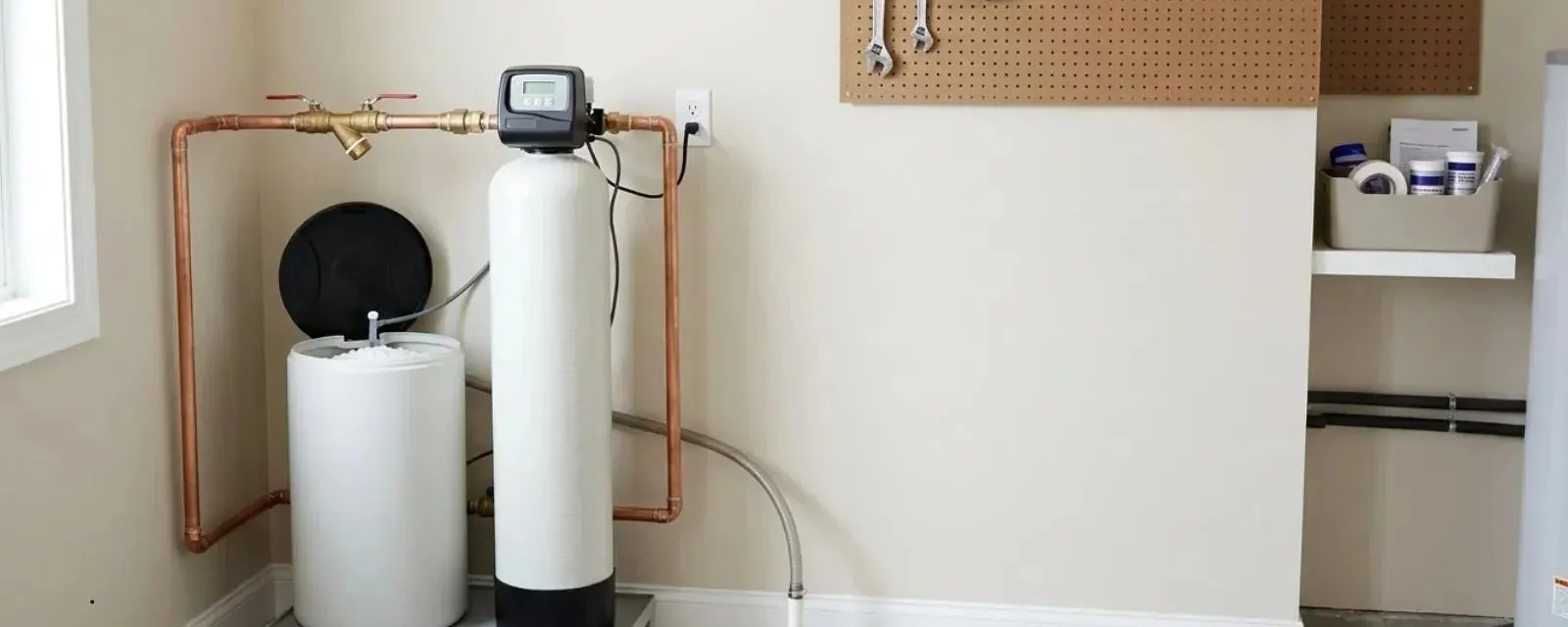
Choosing equipment starts with the water you have and the plumbing it must serve. Water softener and filtration installation involves matching a unit to household size, choosing a spot with drain and power access and setting the regeneration schedule.
If scale has already damaged a heater, the next step might be replacing the water heater and adding treatment so the new one lasts longer. A plumber can also check pressure and inspect the heater before you spend money on a softener.
What makes water treatment cost more or less
Treatment prices vary because systems differ so much. The plumber explains the pieces and names the price before any work starts.
Type of system
A salt-based softener, a salt-free conditioner and a filter are different products with different parts and labor.
Household size and water use
A bigger household needs more capacity, which affects the size and price of the unit.
Installation location
A garage or utility closet with nearby drain and power is simple. A cramped or distant location takes more plumbing.
Bypass and plumbing changes
Adding bypass valves, outdoor hose bibb connections or a new drain line adds work.
Ongoing upkeep
Salt, filter cartridges and occasional service are part of the real cost over the years.
Hard water wear is gradual, so insurance does not usually cover it. Check your policy if you suspect sudden water damage from a failed appliance.
If your other property is across the bay
Hardness differs from one water system to another, so do not assume your Coronado reading applies elsewhere. Our plumber in Chula Vista and plumber in San Diego pages explain how to reach us there, and your own tap test or utility report will tell you the local numbers.
Coronado note: what the 2023 water report says
California American Water's 2023 water quality report for its Coronado system lists the hardness of the treated water at 145 to 280 ppm as calcium carbonate, which is 8.5 to 16.4 grains per gallon. On the USGS scale that is hard to very hard. The practical result is that scale protection is worth planning for on any water heater and on fixtures you do not want to replace early.
The same report puts pH in the Coronado distribution system at 7.9 to 8.2, a slightly alkaline range. That is not a reason to treat the water, but it is a useful number to hand to a plumber when you discuss a softener or filter.
The report also says the supply is treated surface water purchased from the City of San Diego, from the Alvarado and Otay treatment plants. Since two plants feed the range, readings can vary, so test your own tap now and again rather than relying on a single number.
Need a plumber now?
The 24/7 line is open for Coronado homes and businesses.
Questions about this topic in Coronado
Cal Am's 2023 report for its Coronado system lists hardness of 145 to 280 ppm as calcium carbonate, or 8.5 to 16.4 grains per gallon. That falls in the hard to very hard bands on the USGS scale.
Hardness minerals are not generally considered a health hazard. The effect is on soap, scale and appliances. If you have a medical reason to limit sodium, ask your doctor before choosing a salt-based softener.
Cal Am's 2023 report says its Coronado system buys treated surface water from the City of San Diego, produced at the Alvarado and Otay treatment plants. Ask your utility for the current report if you need exact details.
It can. Heat makes dissolved minerals form scale, which collects on elements and tank bottoms and can reduce efficiency. Regular flushing, anode rod checks and descaling a tankless unit all help slow the damage.
They work differently. A softener removes hardness minerals. A conditioner alters how minerals form scale but leaves them in the water. Results with conditioners vary, so ask for independent test data before you buy.
Yes, many households do. You accept more cleaning and plan for heater maintenance. If scale is crusting fixtures or heaters keep failing early, a softener becomes easier to justify. A tap test helps you decide.
Sources and standards behind this page
Every local rule or figure above comes from a published source, listed here so you can check it.
- California American Water, Coronado system 2023 annual water quality report