Finding a sewer leak without digging up the yard
A leaking sewer lateral is found by looking inside it or by testing it. A sewer camera shows cracks, offset joints and root entry directly. Dye and smoke show where liquid or air escapes, and a water-fill or flow test shows whether the pipe holds. Most plumbers combine two methods, so you get a location, not a guess.
Because sewer lines are buried and drain by gravity, a leak rarely announces itself the way a faucet does. Wastewater seeps out of a crack and soaks into soil, so the early clues are indirect. Below are the clues, the methods and the honest limits of each.
Clues that the lateral may be leaking or cracked
One clue is a nudge. Two or three together deserve a professional look.
- Drains gurgle or bubble after a toilet flush or while the washing machine empties.
- A strip of lawn over the pipe path stays soggy or noticeably greener than the rest.
- A sewer smell lingers outdoors near a cleanout, planter bed or foundation edge.
- Backups come back again and again, even after the line has been cleared.
- Slow drains show up in several fixtures at once rather than a single sink.
- You find a sunken patch of soil or a small depression along the pipe route.
What to do if you suspect a sewer leak
Cut back on water use, because every flush and shower adds to the problem. Keep children and pets off soggy or foul-smelling ground, and avoid contact with any wet soil near the line.
Open windows if a sewer odor is inside. Skip chemical drain cleaners, which do nothing for a broken pipe and complicate repairs. Photograph the damp spot, gurgling fixtures or odor source, and note when the signs started before you call.
Which detection method shows what
| Method | How it works | What it can find | What it cannot |
|---|---|---|---|
| Camera inspection | A waterproof camera on a flexible cable travels the pipe and records video | Cracks, roots, offsets, sags, collapsed sections and the distance to each | Cannot see through a fully blocked line until it is cleared |
| Locator tracing | A transmitter in the camera head is tracked from the surface | The depth and surface position of a defect before any digging | Needs a camera pass first and works best on clear paths |
| Dye test | Colored water is flushed and watched for where it appears | Illegal or hidden connections and leaks that surface nearby | Misses leaks that soak straight into soil |
| Smoke test | Non-toxic smoke is pushed into the line and watched for exits | Cracks, broken cleanouts and missing caps that vent to the surface | Weather and soil conditions affect what is visible |
| Pressure or flow test | A section is plugged and filled, or flow is measured at inlet and outlet | Whether a section holds water, and whether volume is going missing | Does not show the exact defect without a camera |
The camera does most of the work
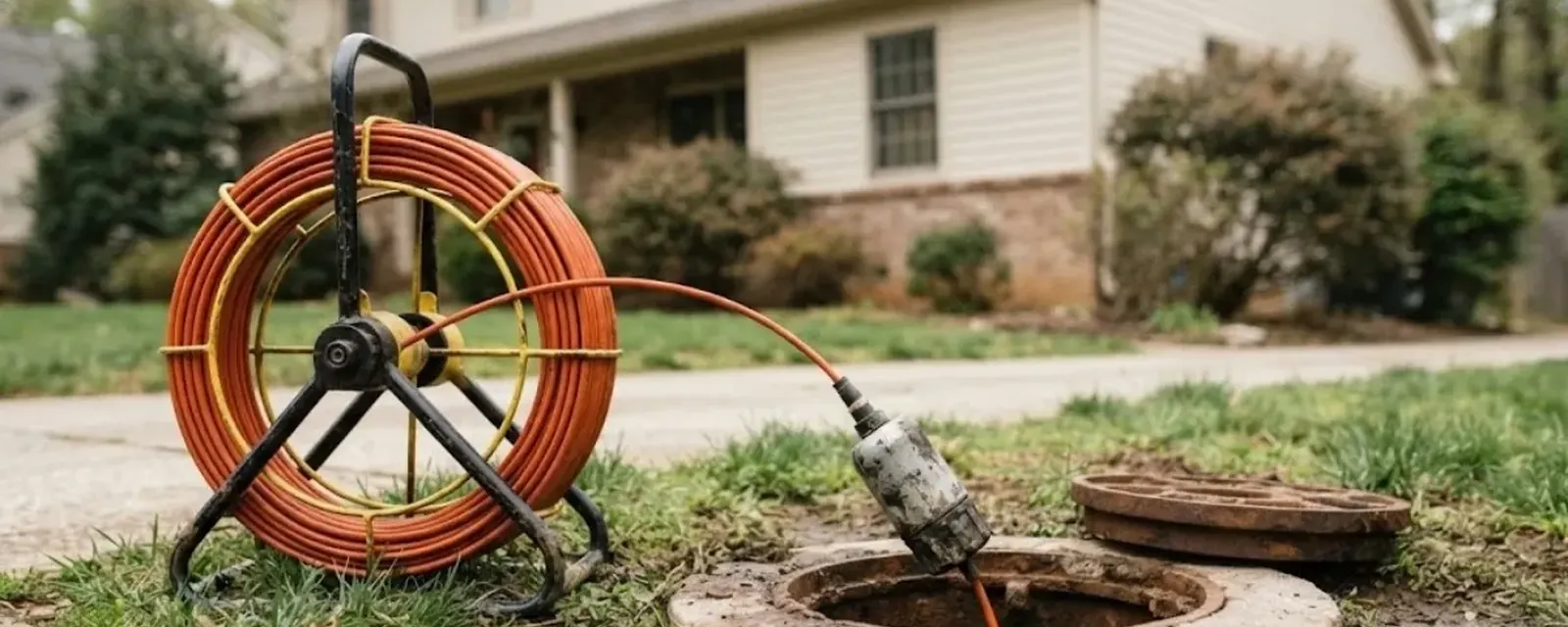
A camera inspection is the standard first step because it shows the pipe itself. The plumber feeds the camera in through a cleanout and records the run, noting distances so any defect can be located later. Cracks look like dark lines, offsets show as a step between pipe sections, and roots appear as a fringe or mat.
A locator can then mark the surface directly above a problem. That precision is what keeps a repair small. The idea behind a proper sewer line inspection is to turn a vague symptom into a distance and a depth that everyone can agree on before anything is dug.
If you suspect a leak, do this first
Note the pattern
Write down which drains act up, when it happens and whether there is any outdoor smell or soggy ground. A clear history helps the plumber choose the right test.
Stop adding avoidable load
Run fewer back-to-back loads of laundry and avoid long showers until the line is checked, since heavy flow through a damaged pipe can make a leak worse.
Locate your cleanout
Find the capped access pipe outside the house and clear plants or debris from around it. Good access shortens the visit.
Book an inspection, not just a snake
Clearing a clog may restore flow without telling you why it happened. Ask for a camera look so you learn whether the pipe is damaged.
Hold off on digging
Do not dig up the yard on a hunch. A locator can mark the exact spot, and a smaller opening means less restoration.
What you can check versus what needs a plumber
Fine to do yourself
- Looking at the cleanout cap for cracks or a missing seal.
- Noticing odor, soggy ground and gurgling and keeping notes.
- Checking whether just one fixture or all of them are slow.
- Clearing leaves and mulch away from the access point.
- Avoiding flushing wipes, grease and paper towels.
Call a plumber for
- Any camera inspection or locator work.
- Smoke or pressure tests that require plugs and equipment.
- Backups that return after clearing.
- A damp or sunken patch that persists in dry weather.
- Sewage in the house or yard, which is both urgent and a health matter.
Why recurring backups point to damage
A clean, sound pipe rarely clogs the same way twice. When backups come back after clearing, something in the pipe is catching debris, such as a rough joint, a bellied low spot or roots pushing through a crack.
Gravity sewers depend on a continuous downhill slope. A sag that holds water, even a shallow one, collects solids and becomes the place where clogs start. A camera shows it as a pool that never drains.
After the leak is found
The result of the inspection sets the path. A small defect at one joint may be fixed with a spot repair. A longer cracked run may be a candidate for lining or replacement. A full list of those paths sits with sewer line repair, which a plumber can walk through using your camera footage.
If the line is only partially blocked and the pipe looks sound, a cleaning may be all you need for now. Either way, keep a copy of the video. It helps with insurance questions, a future sale or a second opinion.
What shapes the cost of sewer leak detection and repair
Detection is usually the smaller part of the bill. You hear a clear price before work starts, explained in terms of the factors below.
Access to the line
A cleanout makes a camera pass quick. Without one, the plumber may need to pull a toilet or open a vent to get in.
Length and condition of the run
A long lateral with many defects takes longer to survey than a short, clear one.
Number of methods needed
A camera alone may answer the question. Smoke, dye or pressure testing adds time and equipment.
Locating and marking
Surface locating adds a step but reduces the size of any later excavation.
What the repair needs
Spot repair, lining and replacement differ in scope, restoration and permit needs, so the price is set after the findings are in.
Coverage for sewer line damage varies by policy and by cause, and many policies exclude gradual wear, so read your policy or ask your insurer before work starts.
Nearby service areas
Gurgling drains and recurring backups are not tied to one town. If you manage a property in a neighboring city, our Chula Vista plumber and San Diego plumber pages explain how to reach a dispatcher there. The same camera-first approach applies across the bay.
Coronado note: city pipe versus your pipe
The City of Coronado's wastewater division runs 17 sewer pump stations and more than 45 miles of underground sewer pipeline, according to the city's Public Services and Engineering pages. Those assets belong to the city. Your lateral, up to and including its connection to the City sewer main, is the homeowner's responsibility under the municipal code.
That split matters for what you do next. A defect found in your lateral is yours to arrange and pay for, so get the camera footage and a measured distance. Sewage coming up from a manhole or overflowing in the street is a different situation.
For sewer overflows and maintenance issues in the public system, the city asks residents to use its online work order system. Report it there, and keep your plumber's footage handy so it is clear where the problem sits relative to the connection.
Need a plumber now?
The 24/7 line is open for Coronado homes and businesses.
Questions about this topic in Coronado
It shows the inside of the pipe on video, including cracks, root intrusion, offset joints, sagging sections and collapses. The plumber records distances so any defect can be located and, with a locator, marked at the surface.
Yes. A crack can let wastewater seep into the soil while the line still flows. That is why a soggy lawn, odor or gurgling can be the only clue, and why a camera look is worth doing even without a clog.
The City of Coronado uses an online work order system for sewer overflows and maintenance issues in the public system. If wastewater is backing into your home, close off use of water and call a plumber for your lateral.
Smoke used for testing is non-toxic and designed for sewer systems, but occupants should be warned ahead of time and traps should hold water. A plumber will explain preparation and may suggest a camera instead for your layout.
The City's permit handout exempts stopping leaks in drain, soil, waste or vent pipe, but replacing a defective concealed drain pipe is new work that needs a permit. For other cases, permit rules vary, so ask the Coronado Building Division.
A straightforward camera pass often fits into a single visit, though longer runs and extra tests take more time. We do not promise arrival or completion times, but the plumber can tell you what to expect once the line is accessed.
Sources and standards behind this page
Every local rule or figure above comes from a published source, listed here so you can check it.
- City of Coronado Community Development, Building Division, Handout 301 (March 2025)
- City of Coronado municipal code and lateral information page (sewer lateral ownership)
- City of Coronado Public Services and Engineering, Wastewater Operations