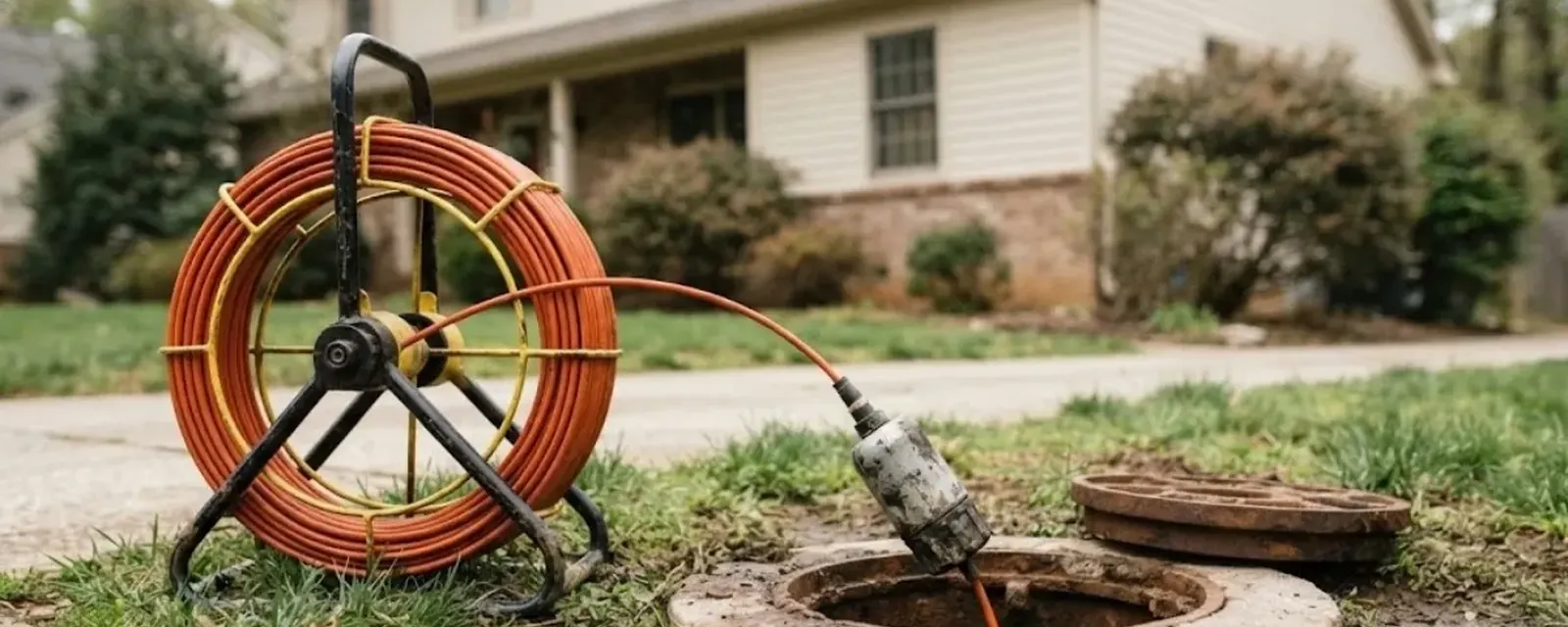
A sewer inspection in Coronado, CA sends a small waterproof camera through your sewer lateral so you can see the pipe condition without digging. It is a planned visit, the kind you book before buying a house, after repeated slow drains or before deciding on a repair. You see the footage as it runs and hear plain explanations of what it shows.
A camera answers questions that guessing cannot. Is that gurgle a clog or a crack? Are roots entering a joint? Does a section hold water? Knowing the answer first keeps you from paying for the wrong fix, and a clear price comes before work starts.
What Coronado's permit handout means for sewer work
The City of Coronado Building Division's handout lists clearing stoppages and repairing leaks as exempt from a permit, so a camera inspection and cleaning visit usually proceeds without one. Replacing a defective concealed drain pipe is different, because it is treated as new work and needs a permit.
In practice that gives an inspection real value. If the footage shows damage, you will know early if the job is a leak fix or a replacement that needs permit planning. Rules can vary, so confirm with the Coronado Building Division before work.
How a camera inspection works
The plumber feeds a flexible rod with a camera head into the sewer cleanout, then pushes it along the lateral toward the city sewer main connection. A monitor shows the live picture and records it. The rod carries a transmitter, so the position of anything unusual can be found above ground.
Before the camera goes in, the line may need a quick cleaning if grease or debris would block the view. That adds a step, but a dirty pipe hides problems.
At the end you get a walk-through of the video and a plain explanation of any defects, with a clear price for any follow-up work before anyone starts it.
Want to see inside the pipe?
Call to schedule a camera inspection and tell us the reason for the visit.
Good reasons to book a camera look
Most people call for one of these situations.
Slow drains that keep returning
A camera shows whether the cause is buildup, a root mass or a damaged section.
Gurgling toilets or sewer smell
These can point to a partial blockage or a vent problem, and the picture helps separate them.
Soggy or sunken ground
A wet patch along the pipe path can point to a leaking or broken lateral.
Before a repair quote
A recording lets you compare quotes against the same evidence.
Buying or selling a home
The lateral is hidden, and a recording documents its condition.
Cracked pipe on camera
A cracked pipe shows up as a dark line, a missing chunk or a joint that no longer lines up. Soil sometimes shows through, and water may stain the area around it. A hairline crack that does not leak is different from a break that lets dirt in.
Not every crack needs immediate repair. We describe each defect, its location and how serious it looks, then outline the options. If the footage shows a break, our sewer line repair page explains spot repair, lining and replacement.
Roots in the lateral
On camera, roots look like pale hairs or thick ropes pushing in at joints. They show where the pipe is already open and how much of the diameter they fill. A light fringe is a maintenance item, while a dense mass that blocks most of the pipe is urgent.
The footage guides the next step. A moderate root presence may be handled with cleaning, and heavier growth may call for hydro jetting after the camera confirms the pipe can take it.
What the footage tells you and what comes next
Camera findings usually fall into a few categories, each with a typical next step.
| What the camera shows | What it means | Typical next step |
|---|---|---|
| Clean pipe with normal flow | No defect in the lateral | No work, keep the recording |
| Grease or scale buildup | Narrowed pipe, clog risk | Cleaning, possibly jetting |
| Roots at joints | Pipe is open at those points | Cleaning now, repair to stop regrowth |
| Standing water in a low spot | Sag in the line | Monitor or discuss repair |
| Crack, break or offset joint | Physical damage | Repair options and permit check |
An inspection when you are buying or selling a home
The sewer lateral runs underground, so a standard walk-through cannot show its condition. A camera inspection produces a recording of the line from the cleanout toward the street. Buyers can compare it against asking price, and sellers can address a defect before listing.
Coronado treats the lateral, from the house through the connection at the City main, as the owner's pipe. A defect found after closing is therefore the new owner's cost. Ask your agent or escrow officer what the sale contract requires, because we do not advise on contract terms.
What to expect on the day
The visit is short and does not require you to leave the house.
Find the access
The plumber locates the cleanout. If none exists, access may be through a toilet or vent, which takes longer.
Prepare the line
If debris would block the view, a quick cleaning comes first.
Run the camera
The camera moves toward the main connection while you watch the monitor and the video records.
Mark and explain
Any defect is marked and described, with its approximate location.
Price any follow-up
If work is needed, you receive a clear price before anything starts.
What affects an inspection price
Pricing is stated up front, and it depends on a handful of things.
Access to the line
A proper cleanout makes the visit simpler than reaching the pipe through a toilet.
Length of the lateral
Longer runs take more time on camera.
Cleaning needed first
A line clogged with debris must be cleared so the camera can see.
Locating the defect
Marking a location above ground uses a transmitter and adds time.
Written or video report
A recording you can share with a buyer or contractor may be handled differently from a verbal walk-through.
Insurance seldom pays for an inspection by itself, though a claim for sudden damage may involve one. Ask your insurer, since we cannot promise coverage.
Sewer Inspection questions in Coronado
Yes. The camera rod carries a transmitter, and a handheld receiver above ground finds the signal. That marks where the pipe runs and how deep it sits, which helps if a defect needs repair or you need to avoid it when planning work.
Usually, yes. Wide cracks, missing sections and offset joints appear clearly. A very fine crack may be hard to see, especially in a dirty pipe, so cleaning first can help. We tell you when the picture is not conclusive.
Length depends on the lateral, whether cleaning must come first and how easy the access is. We give a realistic estimate of the visit when we schedule it, and it is not an arrival promise.
Not usually. A line with no history of problems can go without. If you have had backups, roots or slow drains, a recorded baseline is worth having. We recommend based on your history, not a fixed schedule.
The owner's responsibility runs through the connection at the City sewer main. A private camera inspection shows your own pipe. If you suspect the main under the street, report it through the city's online work order system.
Yes, we can provide the video for your records so you can share it with a buyer, agent or another contractor. Please ask when you book, so we set up the recording and the explanation you need.
We serve both. For more on how that works, see our pages for Chula Vista plumbing and San Diego plumbing. Permit and ownership rules differ by city.
Sources and standards behind this page
Every local rule or figure above comes from a published source, listed here so you can check it.
- City of Coronado Community Development, Building Division, Handout 301 (March 2025)
- City of Coronado municipal code and lateral information page (sewer lateral ownership)