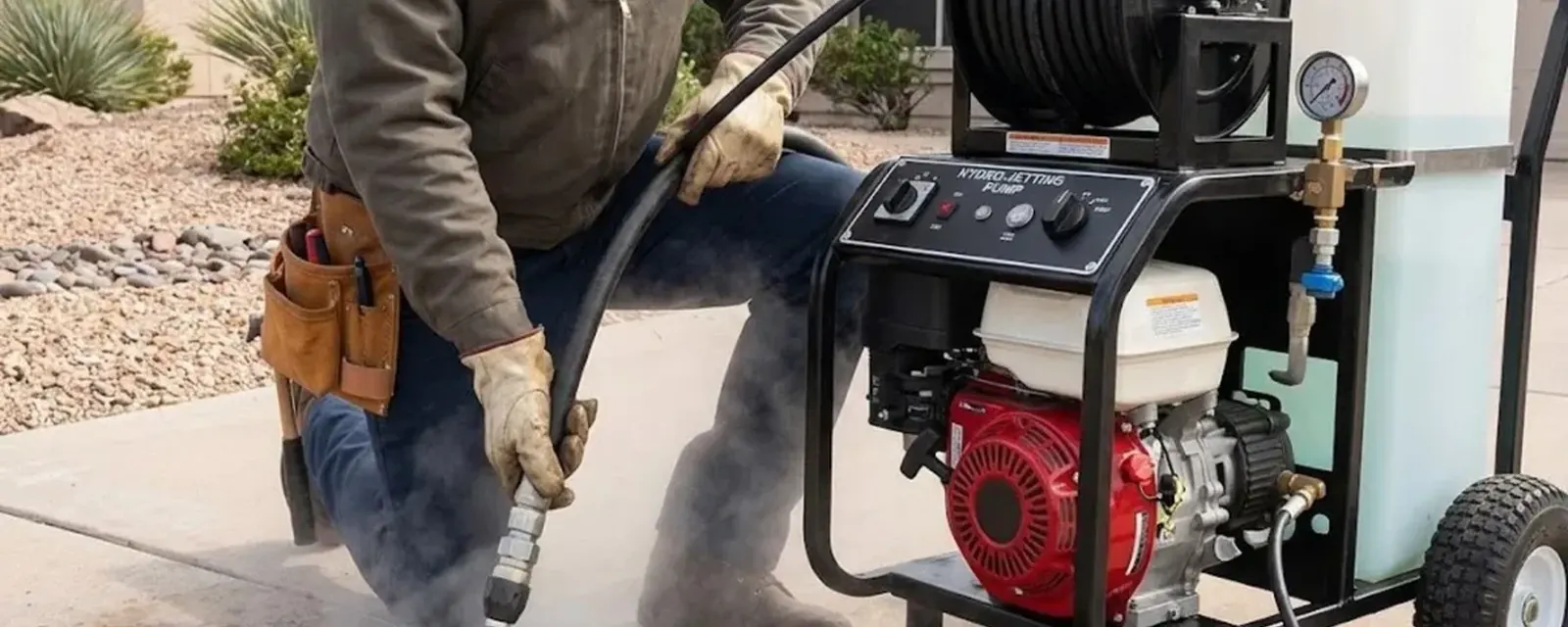
Hydro jetting is the answer when a drain keeps clogging despite repeated snaking, or when a line has stopped completely and the cause looks like roots or heavy grease. In Coronado, CA the work is a controlled blast of high-pressure water through a hose that scours the inside of the pipe clean. Our line runs 24/7, and until help arrives you should stop using water and keep floor drains clear.
A jetter does what a cable cannot. A cable pokes a hole through a blockage, while a jetting nozzle sprays water backward and sideways against the wall of the pipe, cutting loose film, scale and root hairs. The pipe then returns close to its original width. We also tell you honestly when jetting is the wrong call, which matters as much as when it is right.
Where your drain water goes after it leaves Coronado
The City of Coronado runs 17 sewer pump stations and more than 45 miles of underground sewer pipeline, and everything that goes down a drain ends up at the Point Loma Wastewater Treatment Plant. That is a long trip for a wet wipe or a slug of bacon grease.
The practical lesson is simple. Grease and wipes that settle in your own lateral cause the clog you have now, and anything that slips past your property can still collect at a pump station. Jetting cleans your line, but keeping grease and wipes out of the system is what stops the next call.
Jetting versus snaking, honestly compared
Neither tool is better in general. Each fits certain blockages, and a plumber who sells jetting for every clog is not giving you the full picture.
Snaking works best when
- A single object or a soft mat of hair is blocking one fixture.
- The pipe is otherwise clean and has not clogged before.
- Access is limited and a small cable machine fits where a jetter does not.
- The goal is a quick, lower-cost opening of one line.
Jetting works best when
- Grease, scale or soap film coats the full wall of the pipe.
- Roots have grown into joints and keep returning after cutting.
- A line clogs again within weeks of a cable job.
- A cleaner pipe is needed before a camera inspection or a lining job.
Clog keeps coming back?
Describe what happened after the last cable job and we will advise on jetting.
How a jetting visit works
The plumber feeds a hose with a specially shaped nozzle into the line through a cleanout. Water pressure drives the nozzle forward, and jets facing backward pull it along while it cleans. The operator slowly advances, then draws the hose back out, washing debris toward the opening or on to the main.
Most jobs start with a camera look so the plumber knows what is in the pipe before pressure goes on. That step protects you, because a jetter should never be aimed into a line that is already damaged or collapsed.
Afterward we run the camera again to confirm the pipe wall is clean and note anything that needs follow-up, such as a sagging section where water pools. You see the result instead of taking our word for it.
Tree roots in the line
Roots enter a pipe through joints and small cracks, drawn by the moisture and nutrients inside. Once in, they spread into a net that catches paper, grease and everything else. The usual symptom is a drain that slows, clears with a cable and slows again, sometimes with a gurgle in a nearby toilet.
A cable cutter can chop roots at the center of the pipe, but the cut stubs regrow and the outer mass stays in place. Jetting removes much more of the root growth and washes out the debris it held. It does not repair the opening the roots came through, so roots often return unless the pipe is fixed.
That is why we pair root jobs with a camera look. If a joint is open or the pipe is cracked, the lasting fix may be sewer line repair, and the jetting only buys time.
Repeat clogs after snaking
A line that needs cabling every few months is telling you something. Either the pipe wall has built up a layer of grease or scale, or roots keep growing back, or a belly in the pipe holds water where debris settles.
Another cable run only repeats the temporary fix. We recommend one thorough jetting pass followed by a camera check, then a plan to watch the line. If the camera shows a low spot, no cleaning will fully solve it, and we will discuss repair options instead.
For routine clogs in single fixtures, standard drain cleaning is usually still the right and cheaper choice. Jetting is for lines with a pattern.
Main line stopped or backing up: emergency steps
When the lowest drain in the house overflows and the cause may be a root-packed or grease-packed line, treat it as an emergency. Our dispatch is open 24/7 and we schedule same-day visits when we can, including nights and weekends.
- Stop all water use at once, including toilets, laundry and dishwasher.
- Do not pour chemical openers into a full line, because they sit in the pipe and endanger the person doing the work.
- Move items off the floor near the overflowing drain or tub.
- Find the sewer cleanout outside if you can and keep the area clear, since jetting usually starts there.
- Tell the dispatcher about earlier snaking, because that history helps choose the tool.
When jetting is not the right tool
High-pressure water is a poor fit for pipe that is cracked, collapsed, offset at a joint or badly deteriorated. Pressure can enlarge a crack, push soil into a break or drive water into a cavity around the pipe. Old, thin-walled or brittle pipe is the biggest concern.
We do not use a jetter on a line until a camera shows what the pipe can take. If the camera shows damage, we stop, explain what we see and quote a repair or a gentler cleaning method instead. Declining to jet is part of doing the job properly.
What decides a jetting quote
A clear price comes before any work begins. These are the main things that move it up or down.
Length and size of the line
A short run from a cleanout to the main takes less time than a long lateral with several bends.
Severity of buildup
Light film clears in one pass, while heavy scale or dense roots may need several passes with different nozzles.
Camera before and after
A camera adds time but confirms the pipe can take the pressure and shows the result.
Access point
A proper outdoor cleanout is easy to work from. An indoor-only access may need extra setup.
Time of the call
Late-night or weekend work can price differently, and the dispatcher tells you before you agree.
Home insurance rarely covers cleaning a line that clogged from buildup, though some policies respond to sudden damage. Ask your insurer, since we cannot predict a decision.
Hydro Jetting questions in Coronado
A rod or cable pushes through a blockage and leaves most of the buildup behind. Jetting uses pressurized water to wash the whole pipe wall, so it removes grease, scale and much of the root mass. It costs more, which is why we use it when a line shows a pattern.
Yes. The line is staffed 24/7, and a stopped main line or sewage coming up through a floor drain gets dispatched at night and on weekends. Same-day visits are available when the schedule allows. We do not promise an arrival time, but we will tell you what to do while you wait.
On sound pipe the pressure used is safe. On cracked, collapsed or very old pipe it can make things worse. That is why we look with a camera first and decline to jet a line that shows damage, then explain other options.
They can, because jetting clears root growth but does not seal the opening they entered through. If a joint is open or a crack is present, regrowth is likely. A camera tells us whether a repair would prevent a repeat.
Yes. Grease-heavy lines are a classic use. Our commercial plumbing page covers business lines in more detail. Jetting does not replace a grease trap or regular maintenance.
Time depends on the length of the line, how heavy the buildup is and whether a camera pass comes before and after. A short, lightly coated run goes faster than a long lateral full of roots. We can give a realistic idea once we know the access point and history.
Jetting is not a substitute for an inspection. If you are buying, a sewer camera inspection shows the condition of the pipe first. If it shows heavy buildup, jetting afterward can be a sensible fix to discuss with the seller.
Yes. We dispatch to Chula Vista as well as Coronado, and the same camera-first approach applies. See our page on Chula Vista plumbing service for details about that area.
Sources and standards behind this page
Every local rule or figure above comes from a published source, listed here so you can check it.
- City of Coronado municipal code and lateral information page (sewer lateral ownership)
- City of Coronado Public Services and Engineering, Wastewater Operations