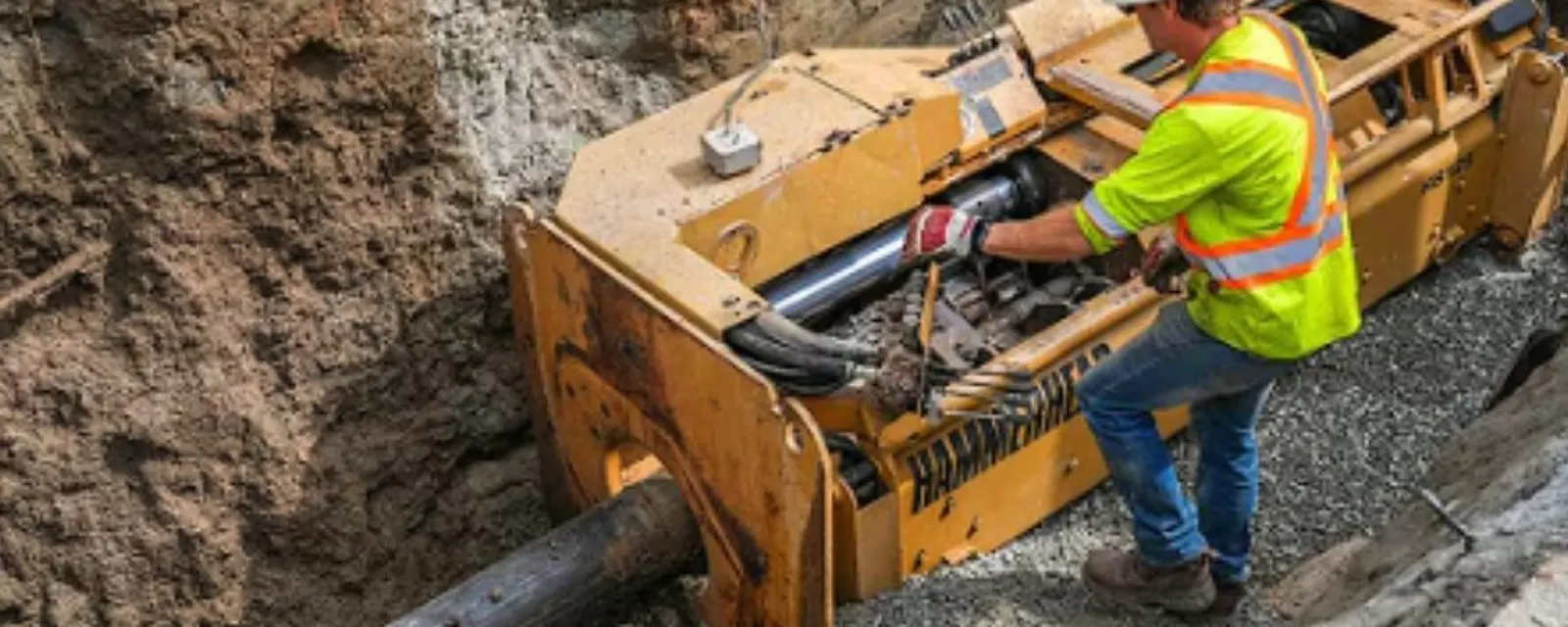
What roots do inside a sewer pipe
Tree roots enter a sewer lateral through small cracks, loose joints or worn connections, because the pipe carries warm water and nutrients. Once inside, hair-thin roots thicken into a net that snags paper and grease, and the line starts draining slowly, gurgling or backing up. Clearing the roots restores flow, but only repairing or lining the pipe stops them returning.
That distinction drives every decision below. A root clog is a maintenance problem, while a root intrusion that has cracked or displaced the pipe is a structural one. Knowing which you have is the difference between a repeat service call every year and a fix that lasts.
Signs roots may be in the line
No single sign proves roots, but a cluster of them points that way.
Slow drains in more than one fixture
When the tub, a toilet and a floor drain all sluggishly empty, the blockage is probably in the shared lateral rather than a single fixture trap.
Gurgling after a flush
Air pushed back through traps as water struggles past an obstruction makes a bubbling sound at nearby drains.
Backups that return
A line that clears with a plunger or snake and clogs again within weeks or months suggests something is regrowing inside it.
Damp or unusually green patches
A soggy strip of yard or a lush streak over the pipe path can mean a leak at a root-damaged joint.
Sewer odor outdoors
A smell near the cleanout or along a property edge can point to a cracked section letting gas or liquid escape.
Sewage backing up into the house is an emergency
If wastewater is rising in a tub, shower or floor drain, treat it as an urgent sewer backup. Stop adding water and call right away, because every flush pushes more into the home.
- Stop running sinks, showers, the dishwasher and the washing machine, and do not flush.
- Keep children and pets away from standing wastewater, and wear gloves and boots if you must step in it.
- Move rugs, boxes and electronics off the floor if you can do it safely, and stay clear of outlets near the water.
- Open a window for air and call our 24/7 line at (619) 927-0312 for a plumber to clear the line and look at the cause.
Jetting, cutting or repair: how the options compare
Each method answers a different question about the pipe, which is why a camera look usually comes first.
| Method | What it does | Best when | Limits |
|---|---|---|---|
| Mechanical cutting | A spinning cutter on a cable chews through roots inside the pipe | Roots are thick and the pipe is basically sound | Leaves rough edges and does not clean grease or scale well |
| Hydro jetting | High-pressure water scours the pipe wall and flushes debris out | A camera shows sound pipe with roots, grease or buildup | Not suited to fragile, broken or badly offset pipe |
| Spot repair | A damaged section is dug out and replaced | One broken joint or short crushed section is the problem | Needs excavation, so access and surface restoration matter |
| Pipe lining | A resin-saturated liner is cured inside the existing pipe | The pipe is cracked or leaky but still roughly aligned | Depends on pipe condition and diameter, and permit rules vary |
| Full replacement | The lateral is replaced by trench or a trenchless pipe-pulling method | The pipe is collapsed, belly-sagged or failing along its length | The largest job, so confirm the cause with a camera first |
Why a camera look matters before any cutting
Sending a cutter blind down a damaged pipe can snag, break more pipe or miss the real defect. A camera inspection shows the roots, the entry point, the pipe material and any sag or crack. It also lets the plumber measure how far from the cleanout the problem sits.
That is the logic behind professional sewer inspection, and it matters most when roots return after earlier clearings. If the picture shows a sound pipe with roots entering at a single joint, a targeted fix may be enough. If it shows a pipe that is failing along its length, repeated cleaning is just buying time.
Clearing roots versus fixing the pipe
Clearing roots (maintenance)
- Opens the line quickly when water is not draining.
- Cutting or jetting removes roots but leaves the entry point open.
- Roots usually regrow, so expect to repeat it on a schedule.
- A reasonable first step when the camera shows mostly sound pipe.
- Does not fix a crack, offset joint or bellied section.
Fixing the pipe (repair or lining)
- Closes or replaces the opening roots use to get in.
- Costs more up front but can end the cycle of recurring blockages.
- Needs a camera survey to confirm where and how bad the damage is.
- Can involve excavation, so surface restoration is part of the plan.
- Work on concealed drain pipe may need a permit, so ask first.
What a root-clearing visit usually looks like
Locate the access point
The plumber finds the cleanout or pulls a fixture such as a toilet to reach the line, then confirms the blockage with a cable.
Cut or jet the roots
A cutting head or a jetting nozzle clears the roots, working back and forth until water flows freely.
Run the camera
With the line open, a camera shows the root entry, the pipe condition and whether a repair is worth discussing.
Discuss the next move
If the pipe is sound, the plumber may suggest a maintenance interval. If not, you review repair or lining options before any work begins.
Keeping roots out in the long run
Prevention is mostly about knowing where your pipe runs and what grows near it.
- Find your cleanout and keep the cap accessible, since a plumber can reach the line faster when it is not buried under plants or paving.
- Ask a plumber to mark the lateral path before you plant a tree, and keep thirsty roots well away from it.
- Choose slower-rooting plants near the pipe path rather than fast, water-seeking species.
- Never flush wipes, grease or paper towels, because they catch on the first rough spot roots create.
- Schedule a camera check after any slow-drain episode that clears but returns, rather than waiting for a full backup.
- Avoid chemical root killers poured down toilets unless a plumber recommends a specific product for your pipe type, since they vary in effect.
What makes one root job cost more than another
Prices vary widely because roots are only a symptom. The price is set clearly before work starts, and only after the plumber has seen what the line looks like.
Length and depth of the affected run
A short, shallow stretch near a cleanout is quick to work. A long run with no access point takes more time and equipment.
Pipe material and condition
Sound pipe with roots at one joint is a lighter job than pipe that is cracked, offset or sagging.
Method chosen
Cutting and jetting are service calls. Spot repair, lining and replacement are projects with their own scope.
Access and surface restoration
Digging through a lawn, patio or driveway adds labor and restoration work that the plumber should explain upfront.
Permit and inspection steps
Replacing concealed drain pipe needs a permit, which adds paperwork even when the repair itself is straightforward.
Most homeowner policies treat root damage and gradual pipe failure as maintenance, so check your policy wording before assuming a repair is covered.
Where to go from here
If the line is only partly blocked and nothing has backed up, book a sewer line cleaning and a camera look before the problem grows. If the camera shows damage, a plumber can walk through sewer line repair options and what each involves.
Roots and aging pipe are not unique to one town. If you own a property in a neighboring area, our plumber in Chula Vista and plumber in San Diego pages describe how to reach a dispatcher there, and the same camera-first approach applies.
Coronado note: who owns the pipe, and what needs a permit
Under Coronado's municipal code and the City's lateral information page, the homeowner is responsible for the sewer lateral up to and including the connection to the City sewer main. A root problem in that pipe is therefore yours to clear and, if needed, repair, even though the damaged section may lie under the street or a neighbor's frontage. Ask for a camera survey that measures where the defect sits.
The City of Coronado Building Division's permit handout lists stopping leaks in drain, soil, waste or vent pipe and clearing stoppages as exempt. So cutting or jetting roots, or sealing a leaking joint, does not need a permit. The same handout treats replacing a defective concealed drain pipe as new work that does require one.
In practice, that means a root-clearing call can happen right away, while a replacement should include a permit step. Rules for lining are not listed, so permit rules vary and the Coronado Building Division is the place to ask before you commit.
Need a plumber now?
The 24/7 line is open for Coronado homes and businesses.
Questions about this topic in Coronado
Roots usually enter at an existing weakness such as a loose joint or hairline crack, then widen it as they grow. Over time they can break or displace older pipe, which is why repeated blockages deserve a camera inspection.
Cutting is good against thick roots, and jetting is better at washing the pipe wall clean. Many plumbers use both depending on what the camera shows. Neither stops regrowth, because the opening the roots used is still there.
The homeowner is responsible for the lateral up to and including the connection to the City sewer main, per the municipal code and the City's lateral page. Report any overflow in the public main to the City.
Clearing a stoppage is on the exempt list in the City's permit handout. Swapping out a defective drain pipe hidden in a wall or slab counts as new work, so a permit applies. For anything in between, permit rules vary, so ask the Coronado Building Division.
There is no single schedule. Some lines stay clear for a year or more and others clog within months. A camera view helps set a sensible interval, and a pattern of fast regrowth is a sign to discuss repair or lining.
They may slow regrowth in some pipes, but they do not repair cracks, and some products are not suited to every pipe type. Ask a plumber which, if any, makes sense after a camera look.
Sources and standards behind this page
Every local rule or figure above comes from a published source, listed here so you can check it.
- City of Coronado Community Development, Building Division, Handout 301 (March 2025)
- City of Coronado municipal code and lateral information page (sewer lateral ownership)