Work down this ladder before you buy anything
A sink that drains slowly without a visible clog has a partial restriction somewhere between the strainer and the sewer. The fastest way to find where is to follow the drain downstream, one question at a time, and stop at the first step that changes the result.
Check the stopper and strainer
Pull the stopper, clean it, and look into the drain opening with a flashlight. Hair and soap film cling here more than anywhere else.
Empty and clean the trap
Place a bucket under the curved pipe, loosen the slip nuts by hand or with a wrench, and clear the trap. Reassemble and run the water.
Test other fixtures
Run the shower, the tub and the other sinks. If only this sink is slow, the restriction is local to its own pipe.
Listen for gurgling
Bubbling sounds or a toilet that burps when a sink drains point to a venting issue or a deeper restriction.
Note which fixtures are slow together
Several slow fixtures on the same floor suggest a branch line. Slow fixtures everywhere, especially the lowest ones, point toward the main drain or the lateral.
What each pattern usually points to
| What you see | Likely cause | Reasonable next move |
|---|---|---|
| One sink slow, trap is clean | Grease or soap film lining the pipe beyond the trap | A plunger or hand auger, or a drain cleaning visit |
| Water drains, then gurgles | A vent that is partly blocked or an air flow issue | Call a plumber, since vent work is often on the roof |
| Two or three fixtures slow together | Buildup in a shared branch line | Professional cleaning of the branch |
| Lowest drains slow, toilets gurgle | Main line or sewer lateral restriction | Stop using water heavily and call |
| Slow, then fine, then slow again | Partial blockage that shifts with flow | Have it cleared and inspected with a camera |
The hidden causes behind a slow sink
Grease and soap film
Kitchen grease and bathroom soap cool and stick to pipe walls. The opening narrows slowly, so the sink gets gradually slower, not suddenly stopped.
A partly blocked trap
The trap holds water on purpose, and it is also where debris collects. A trap that is partly full of sludge slows flow even when nothing seems stuck.
Poor venting
A drain pipe needs air behind the water. If the vent is blocked or missing, the water drains in slow, glugging surges.
Branch line buildup
The pipe that collects several fixtures collects scale, hair and residue over time. Every fixture feeding it slows down together.
A restricted lateral
The line from the house to the sewer main can narrow from buildup or roots. The first sign is often a sink that has gone sluggish for no clear reason.
What you can do versus what needs a camera and a professional
Reasonable at home
- Cleaning the stopper, strainer and trap.
- Using a plunger on a single slow sink with the overflow blocked.
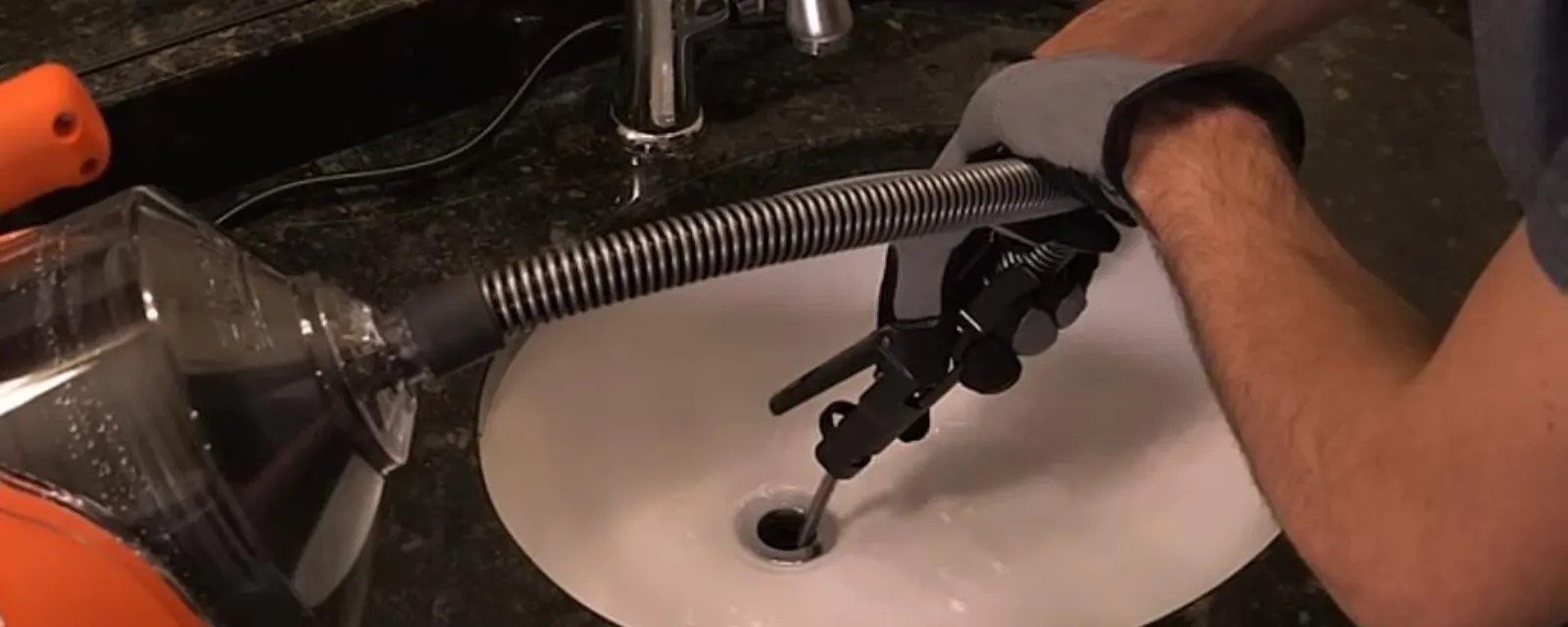
- Using a small hand auger on a fixture drain, if you stop when you meet resistance you cannot clear.
- Running hot tap water for a minute after each sink use to move soft grease along.
Call a plumber for
- More than one fixture slow at the same time.
- Gurgling toilets or bubbles rising in a tub or shower drain.
- A slow drain that returns within days of being cleared.
- Any sewage smell, wet spot in the yard or backing up at the lowest fixture.
A word on chemical drain cleaners
Liquid drain openers can sit in a partially blocked pipe and damage fittings, and they are a hazard to whoever clears the drain next. If a bottle has already been used, tell the plumber, since the water in the trap may be caustic.
They also tend to hide the real problem. A cleaner might burn a hole through a soft blockage and bring a few days of better flow, while the grease film or branch buildup behind it stays in place.
When a camera inspection earns its place
If a drain has been cleared once and slows again within weeks, guessing stops being useful. A camera on a flexible cable shows whether the pipe has grease film, scale, a low spot that holds water, a joint that has shifted or roots entering at a seam.
That picture changes the plan. Film and scale call for cleaning or jetting. A sag or a broken joint calls for repair, and that is a different conversation about cost and, in some cases, permits. Our sewer inspection page explains what the camera records and how the footage is used.
What affects the cost of fixing a slow drain
Prices swing between a quick trap cleaning and a full line clearing. Pricing is stated before work starts and depends on which part of the system is involved.
Where the restriction sits
A fixture trap is quick to clear. A branch line takes more equipment, and a lateral takes the most.
Access
Cleanouts make the work simpler. When there is no cleanout, the plumber may have to go in through a vent or remove a fixture.
Method needed
A cable machine handles soft buildup, while hydro-jetting and camera inspection are used for heavy film or recurring trouble.
Whether it keeps returning
A drain that clogs every few weeks suggests a cause such as a belly or root intrusion, which needs inspection and sometimes repair.
Vent involvement
If a vent issue is found, the work may extend to the roof or to other parts of the system.
Routine drain clearing is maintenance and is not normally covered, but backup damage may be, depending on your policy, so ask your carrier if water has entered the home.
Habits that keep drains moving
- Wipe greasy pans with a paper towel before washing so the fat goes in the trash, not the pipe.
- Fit a mesh strainer to every sink, tub and shower drain and empty it often.
- Flush a kitchen drain with hot water after washing greasy dishes.
- Do not wash coffee grounds, rice or eggshells down the drain.
- Remove and clean bathroom sink stoppers every month or so, before hair collects.
- Treat a first sign of sluggishness as a prompt to clean, not a problem to wait out.
Cleaning methods, from light to heavy
A plunger or hand auger handles a restriction close to the fixture. A cable machine reaches further, and our drain cleaning service page describes how the cable clears branch lines.
When the film is thick, scale has hardened or the problem keeps returning, hydro-jetting uses high pressure water to scour the pipe wall, and a camera shows what is left. If the camera points to the lateral, sewer line cleaning addresses the main run.
If you live just across the water
These diagnostic steps work in any house. A home in Chula Vista has sewer billing that depends on its water district, and in San Diego the city treats the whole lateral up to the main as the owner's responsibility. Check who handles what in your own city before deciding who pays for a main line fix.
Coronado note: the lateral is yours, and clearing a stoppage needs no permit
Coronado's municipal code and the city's lateral page make the homeowner responsible for the sewer lateral up to and including the connection to the City sewer main. That has a practical meaning. If a slow drain traces to the lateral, the repair or cleaning is your responsibility, not the city's, even though part of the pipe is out in the street.
Coronado's Handout 301, published by the Building Division in March 2025, exempts clearing stoppages from a permit, along with repairing leaks in pipes, valves or fixtures. A plumber can clear a slow drain without a permit being pulled. A defective concealed drain pipe that must be replaced counts as new work and does need one, so ask the Building Division at (619) 522-7331 if the camera shows pipe damage.
Need a plumber now?
The 24/7 line is open for Coronado homes and businesses.
Questions about this topic in Coronado
The restriction is probably further down the pipe than you can see. Grease film, a partly full trap, a branch line with scale or a vent problem all slow flow without fully blocking it. Testing other fixtures tells you how far down it sits.
The homeowner. Coronado's code makes the owner responsible for the lateral, meaning the pipe belongs to you right up to where it joins the City main. If a slow drain traces to the lateral, plan to have it cleared or repaired at your own expense.
No, not for clearing a stoppage. The city's Building Division lists that work as exempt. A concealed drain pipe that has to be replaced is a different matter and does need a permit, so call the Division with questions about anything beyond cleaning.
Often, yes. When the vent is blocked or inadequate, air is pulled through the trap seal as water drains, which makes a gurgling sound. It can also point to a deeper restriction, so a plumber should check before it becomes a backup.
It can. If several fixtures are slow together, especially the lowest ones, or toilets gurgle when you run water, the problem may be the main line or the lateral. A camera inspection will show the condition of the pipe.
There is no single schedule. Rinse with hot water after greasy washing, avoid pouring fat down the drain and clean the trap if flow slows. A drain that needs help every few weeks should be inspected.
Sources and standards behind this page
Every local rule or figure above comes from a published source, listed here so you can check it.
- City of Coronado Community Development, Building Division, Handout 301 (March 2025)
- City of Coronado municipal code and lateral information page (sewer lateral ownership)